EN
EN


Het ontwerpen van een pallettransportbandmontagelijn: 10 parameters die eerst moeten worden gedefinieerd
Henton Aluminum | Engineering en selectie van pallettransportbanden
Veel klanten vragen een offerte voor een pallettransportband aan met één vraag:
“Hoeveel kost een transportband van 10 meter?”
De lengte van de transportband alleen bepaalt echter niet de juiste oplossing.
Twee transportbanden kunnen beide 10 meter lang zijn, maar de ene vervoert lichtgewicht elektronische onderdelen terwijl de andere batterijmodules vervoert die meer dan 100 kg wegen. De ene beweegt producten mogelijk alleen continu, terwijl de andere ook pallets automatisch moet stoppen, optillen, positioneren, inspecteren en terugbrengen.
Verschillende bedrijfsomstandigheden vereisen verschillende kettingen, aluminiumprofielen, pallets, aandrijfsystemen en besturingen.
Een stabiele pallettransportbandassemblagelijn begint met de volgende tien parameters.
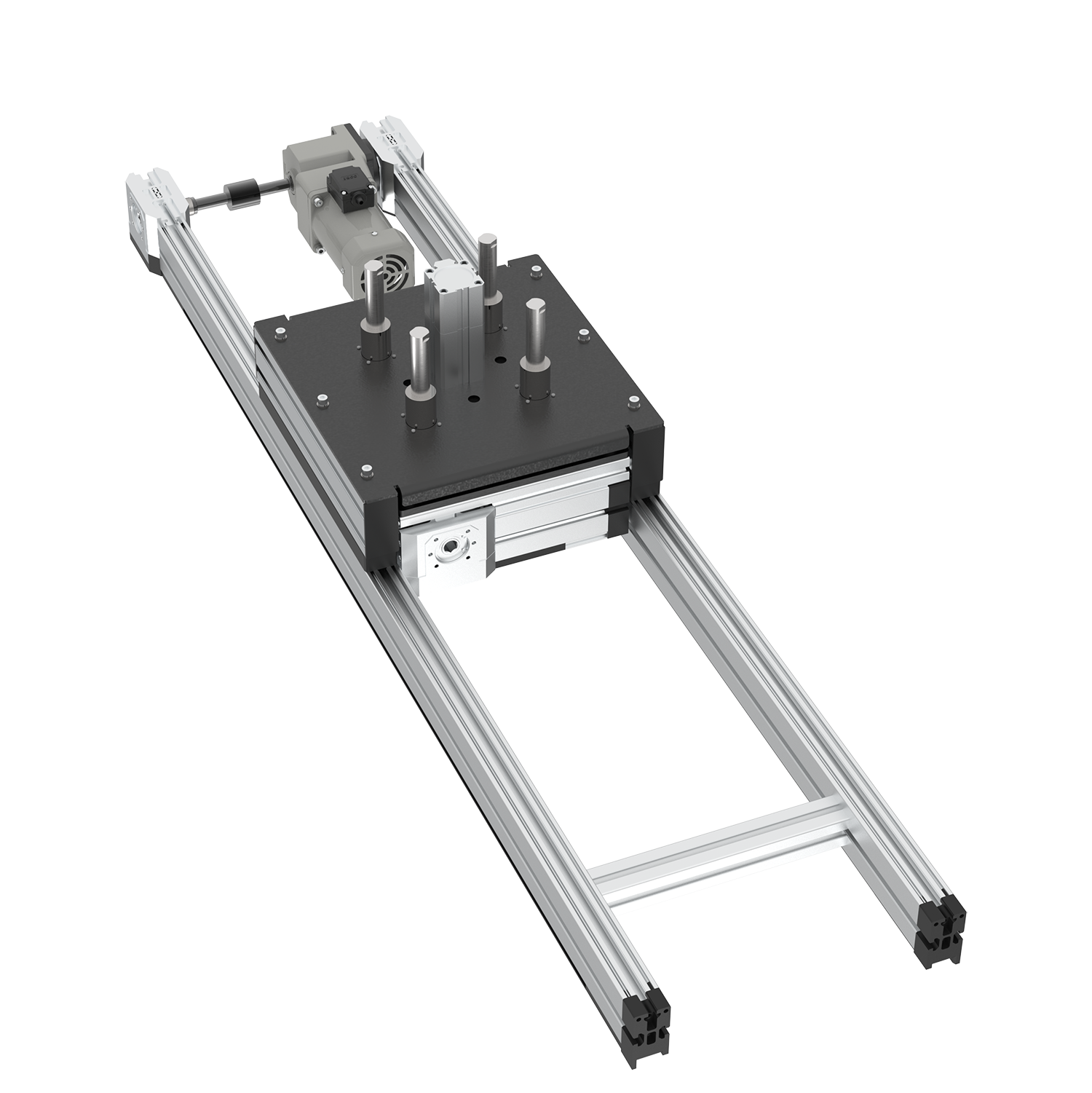 01 Wat is het totaalgewicht van het product en de pallet?
De belastingberekening kan niet uitsluitend gebaseerd worden op het gewicht van het product.
De werkelijke bewegende belasting omvat:
Product + fixture + palletplaat + palletaccessoires
Bijvoorbeeld: als het product 20 kg weegt, de fixture 8 kg en de aluminiumpallet 7 kg, dan is de werkelijke belasting per pallet 35 kg, niet 20 kg.
De technische beoordeling moet ook bevestigen:
Of het zwaartepunt gecentreerd is
Palletafmetingen
Of de belasting excentrisch is
Waar de pallet in contact komt met de transportbandkettingen
Hoeveel pallets tegelijkertijd op de lijn lopen
Hoeveel pallets zich onder volbelaste omstandigheden kunnen ophopen
Bij de keuze van de ketting moet niet alleen de totale belasting van de transportband, maar ook de belasting op elke rol, elke ketting en het mogelijke belastingsverschil tussen de linker- en rechterketting worden gecontroleerd.
Bij de keuze van een vrijloopketting moeten ingenieurs ook palletmassa, afmetingen, aantal, transportsnelheid, transportbandlengte en ophopingslengte gezamenlijk in overweging nemen, in plaats van uitsluitend het gewicht van het product.
Voor Henton is de eerste stap niet het kiezen van een motor. Het is het identificeren van de zwaarste bedrijfsomstandigheid van de gehele lijn.
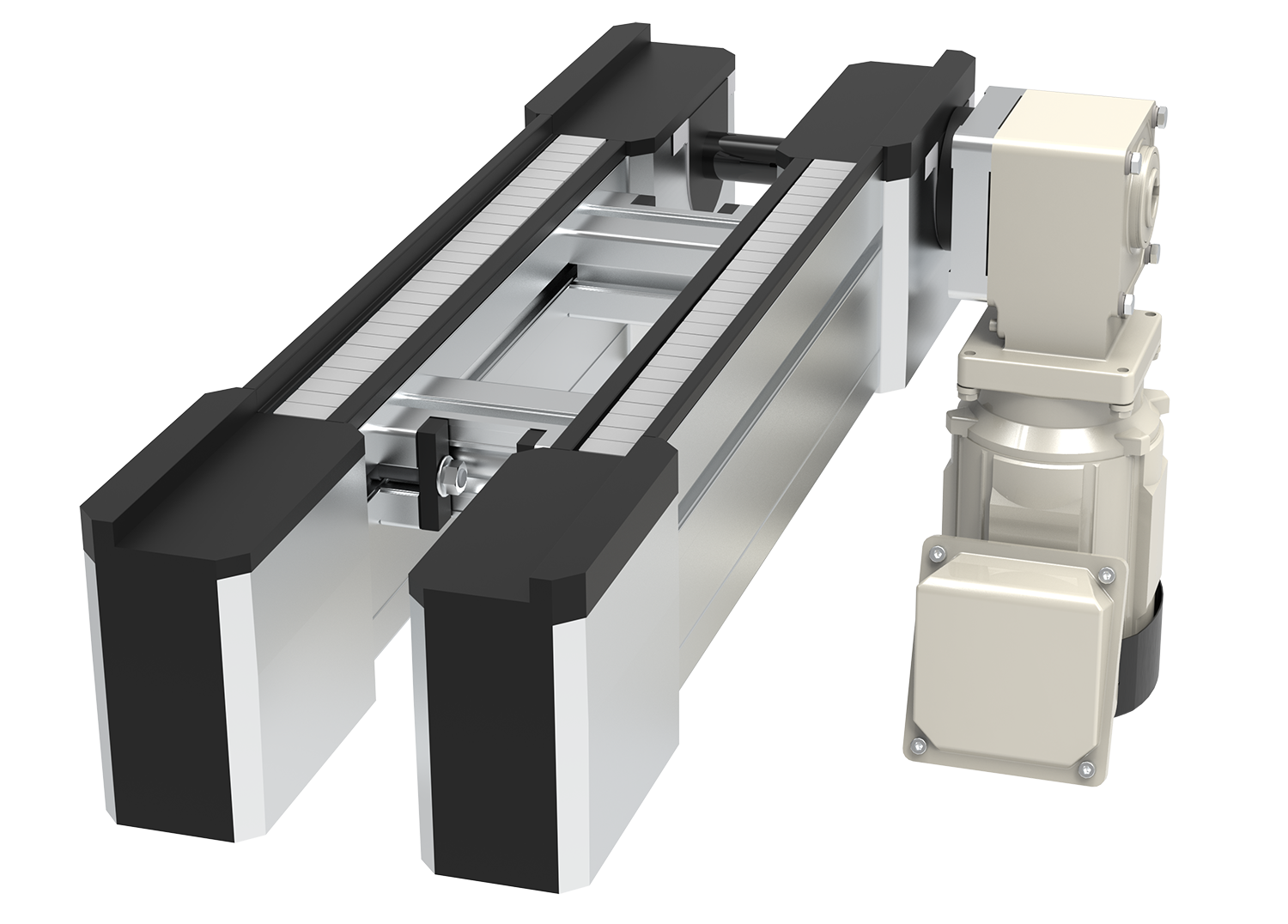 02 Hoeveel producten moeten per minuut worden vervoerd?
‘Hoe sneller de transportband, hoe beter’ is een van de meest voorkomende misverstanden bij het ontwerp van pallettransportbanden.
De werkelijke eis is niet de hoogste ketelsnelheid, maar het aantal afgewerkte producten dat de lijn betrouwbaar per minuut kan leveren.
Als het productiedoel 6 producten per minuut is en elke pallet 1 product bevat, dan is de gemiddelde palletafstandstijd:
60 ÷ 6 = 10 seconden per pallet
Als elke pallet 2 producten bevat, wordt de toegestane palletafstandstijd:
60 × 2 ÷ 6 = 20 seconden per pallet
Voordat de transportsnelheid wordt vastgesteld, moet het volgende worden bevestigd:
Doeloutput per minuut
Aantal producten per pallet
Afstand tussen werkstations
Tijd die nodig is voor het starten, stoppen en positioneren van een pallet
Of het laden en lossen handmatig gebeurt
Of inspectie, schroeven, doseren, lassen of andere stationaire processen zijn opgenomen
De transportbandsnelheid is een uitkomst van het ontwerpproces, niet het uitgangspunt.
Een snellere ketting verhoogt de productie niet wanneer werkstations geblokkeerd blijven. Het kan alleen de impact, het geluid en de slijtage verhogen.
 03 Wat is de cyclusduur van elk werkstation?
Output per minuut definieert het productiedoel. De cyclusduur van het werkstation bepaalt of de lijn dit doel daadwerkelijk kan halen.
Als elk product binnen 10 seconden moet worden afgewerkt, mag geen enkel werkstation systematisch langer dan 10 seconden nodig hebben zonder extra capaciteit.
Een echte lijn ziet er zo uit:
Laadtijd: 5 seconden
Scannen: 3 seconden
Schroevendraaien: 18 seconden
Inspectie: 8 seconden
In dit geval is het 18 seconden durende schroevendrijfstation niet de transportbandsnelheidde werkelijke productiebuitengeluk.
Mogelijke oplossingen zijn onder meer:
Een parallel werkstation toevoegen
Vervoer van meerdere producten op één pallet
Een proces in meerdere stappen splitsen
Toevoeging van buffercapaciteit
Gebruik van automatische apparatuur
Herrangschikking van de werkstation
Een palletvervoerder is niet alleen een apparaat dat producten naar voren verplaatst. Het moet processen met verschillende cyclustijden in een evenwichtige productie-stroom organiseren.
Zonder balancering van de cyclustijd zal het verhogen van de ketengrootte, motorvermogen of framegrootte het capaciteitsprobleem niet oplossen.
 04 Hoeveel pallets moeten tegelijkertijd worden opgebouwd?
Een van de belangrijkste voordelen van een pallettransportband met vrije stroom is dat de keten zich kan blijven bewegen terwijl de pallets stoppen en in de rij staan bij een stop.
De opslagcapaciteit is echter niet onbeperkt.
Meer pallets en langere ophoopzones verhogen de wrijving, de aandrijvingsvermogen en de slijtage van de rollen.
De vereiste accumulatiecapaciteit wordt gewoonlijk berekend op basis van de mogelijke stilstandstijd van het proces stroomafwaarts.
Bijvoorbeeld:
Productiecyclus: 20 seconden per pallet
Typische hersteltijd stroomafwaarts na een storing: 3 minuten
Het stroomopwaartse proces blijft gedurende die 3 minuten voeden
De minimale theoretische buffer is:
180 ÷ 20 = 9 pallets
Het definitieve ontwerp moet ook rekening houden met palletafstand, vrijgavelogica nadat de productie is hervat en een adequate reserve.
De technische beoordeling moet bovendien bevestigen:
Of de gehele lijn of slechts geselecteerde zones pallets opstapelen
Of producten tijdens het opstapelen contact mogen hebben met elkaar
Hoeveel pallets een stopper moet kunnen vasthouden
Of accumulatiezones sectie-afhankelijk moeten stoppen
Of de aandrijving een volledig geaccumuleerde lijn kan aansturen
Veel transportbanden draaien normaal wanneer ze leeg zijn, maar overbelasten, trillen of stagneren wanneer alle pallets zich ophopen. In de meeste gevallen was de volledige geaccumuleerde belasting niet volledig meegenomen in het ontwerp.
 05 Wat zijn de lengte en werkhoogte van de transportband?
Een langere transportband is niet eenvoudigweg een kwestie van enkele meters aluminiumprofiel toevoegen.
Naarmate de lengte toeneemt, nemen ook het gewicht van de ketting, de geleidewrijving, het aantal pallets en de geaccumuleerde spanning toe. Boven een bepaalde lengte kan het ontwerp vereisen:
Meerdere aandrijfsecties
Extra tussensteunen
Grotere frameprofielen
Een herzien kettingspanningsmechanisme
Gebiedsbesturing
Toegang voor onderhoud
Bij de keuze van de ketting worden de transportbandlengte, snelheid, wrijvingscoëfficiënt, maximale vervoermassa en bedrijfsomgeving als belangrijke invoergegevens gebruikt voor de berekening van de kettingspanning. Traagheid moet ook worden meegenomen wanneer de transportband snel opstart of plotseling een last duwt.
De werkhoogte moet eveneens technisch worden ontworpen, niet willekeurig worden gekozen.
Bij handmatige assemblagelijnen moet rekening worden gehouden met de lichaamslengte van de operator, het werk zittend of staand, de positie van de gereedschappen en het werkoppervlak voor het product. Bij geautomatiseerde lijnen moeten robots, inspectiesystemen, doseermachines en laadapparatuur op elkaar zijn afgestemd.
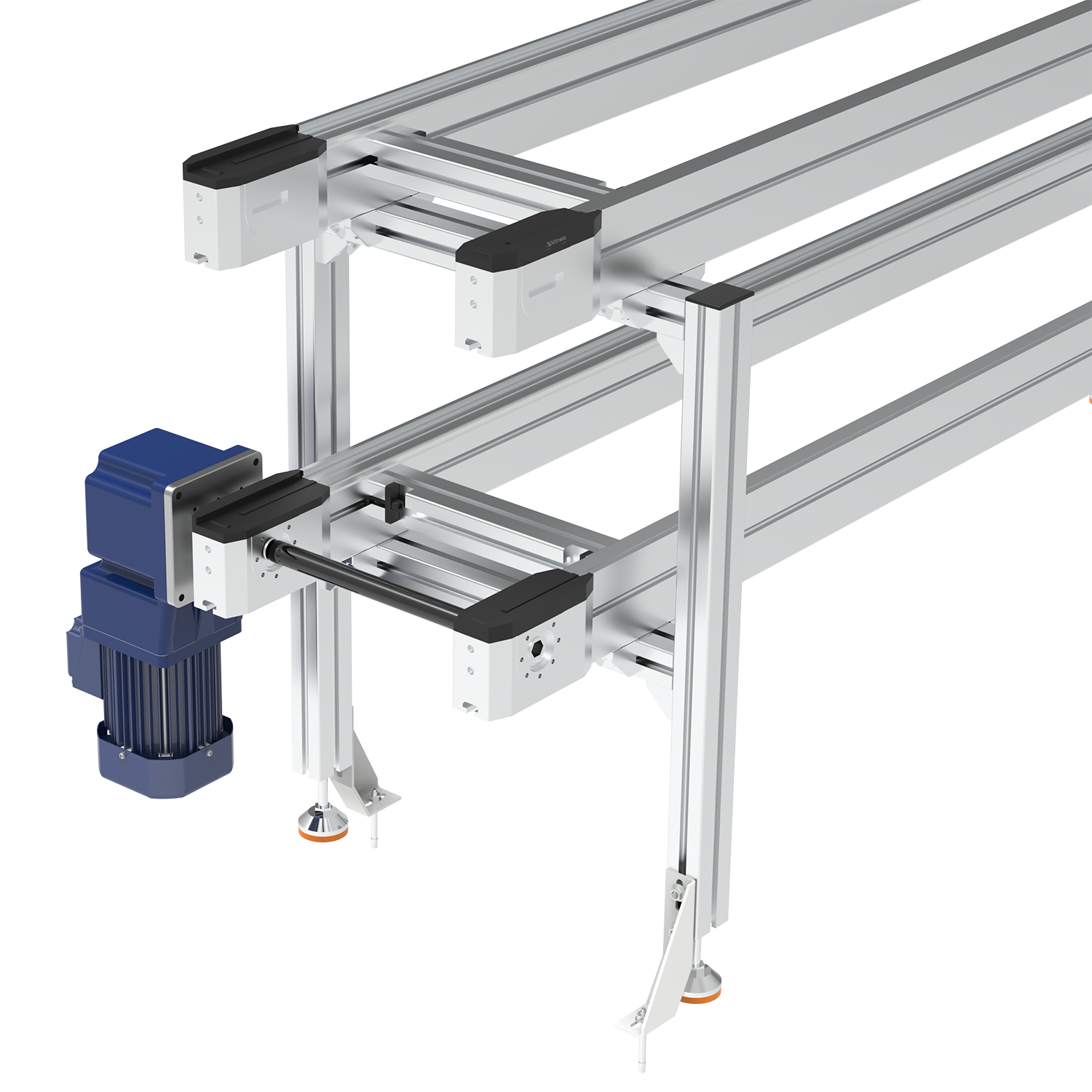
Bij een dubbelniveau retourtransportband moet het ontwerp ook controleren:
Bovenste werkhoogte
Onderste retourvrijheid
Hoogte van het hef- en overdrachtsmechanisme
Ruimte voor motoren en tandwielen
Instelbereik van de nivelleervoet
De werkhoogte lijkt een eenvoudige afmeting, maar beïnvloedt direct de ergonomie en de integratie van apparatuur.
 06 Is heffen-en-positioneren vereist?
Een stopper kan een pallet tegenhouden, maar tegenhouden is niet hetzelfde als nauwkeurig positioneren.
Handmatige assemblage, visuele inspectie en basis-scanning vereisen mogelijk alleen dat de pallet binnen een algemene zone stopt. Een stopper kan voor deze bewerkingen voldoende zijn.
Heffen-en-positioneren-eenheden zijn meestal vereist voor:
Robotopslag
Automatisch schroeven
Doseren of coaten
Press fitting
Laserinspectie
Beeldvorming met zichtsystemen
Nauwkeurige meting
Lassen
Automatische in- en uitleg
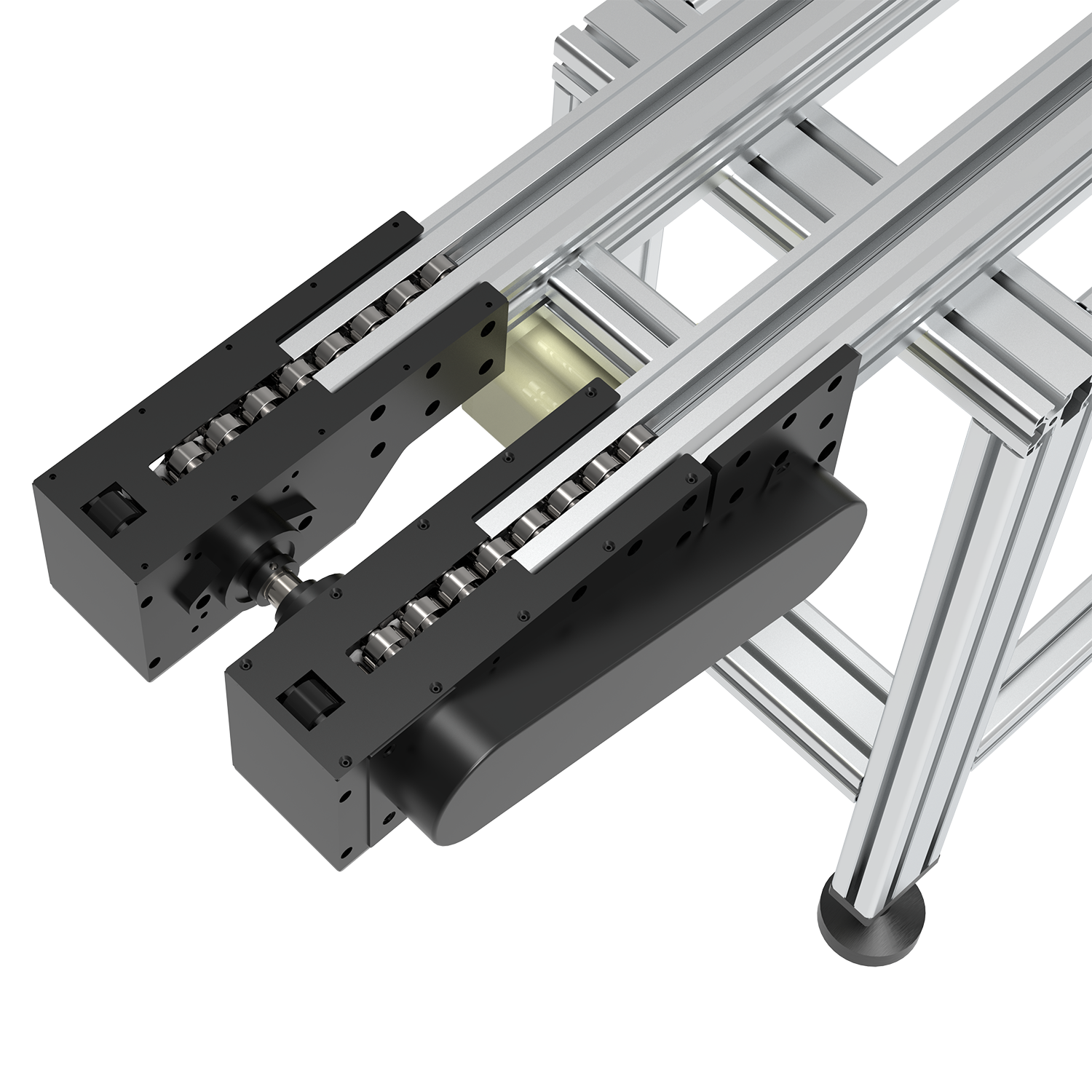
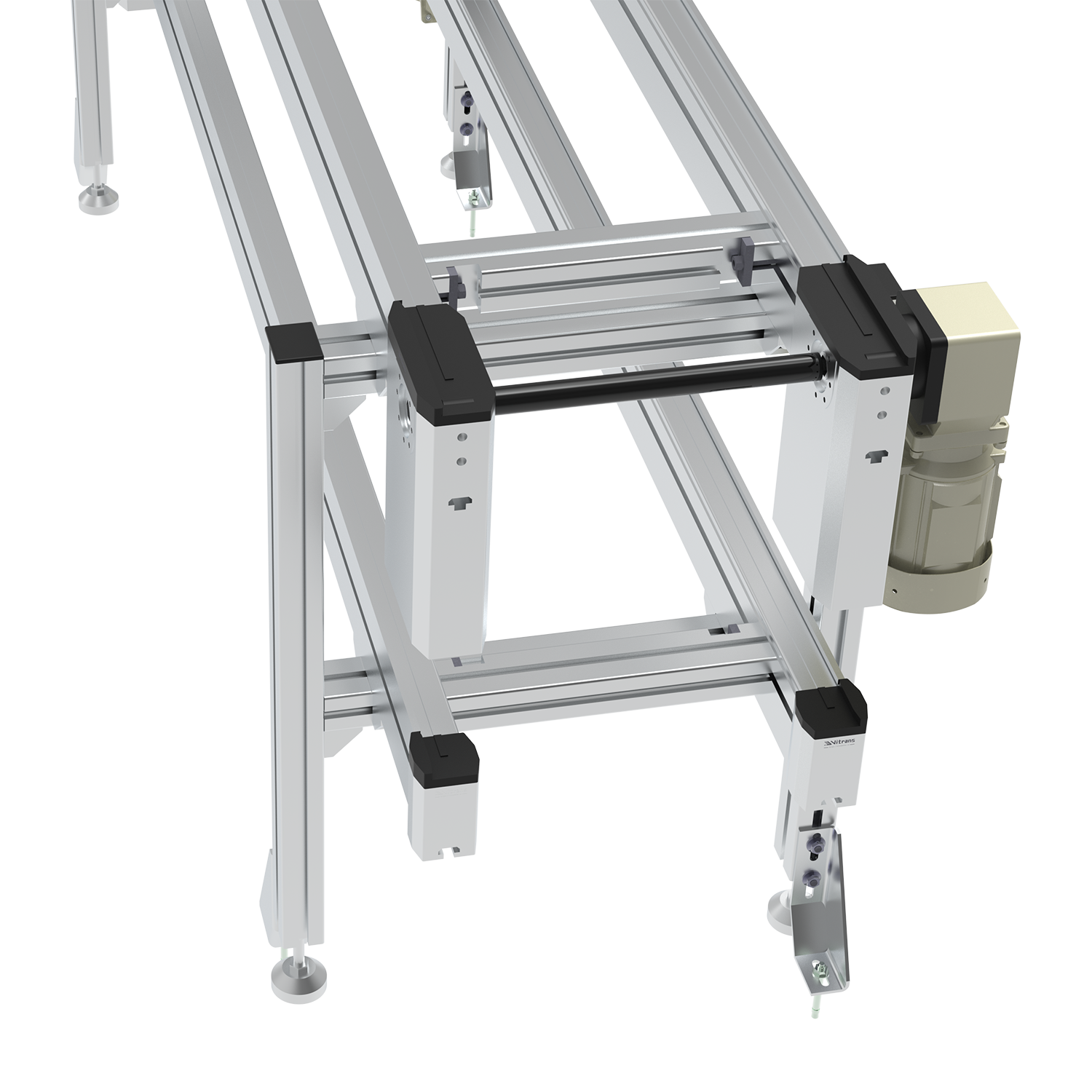
Een hef- en positioneereenheid tilt het pallet op van de transportbandrollen en positioneert het met behulp van pennen, bushings of precisie-referentievlakken.
Dit biedt twee belangrijke voordelen:
Ten eerste worden verwerking- en perskrachten niet direct overgebracht op de transportbandketting en -rollen.
Ten tweede wordt de positie van het pallet bepaald door de positioneereenheid, en niet door de stoppositie van de ketting.
Daarom is het onvoldoende om alleen te vermelden dat een stopper nodig is. Ook de processen die na het stoppen worden uitgevoerd, moeten worden gedefinieerd.
 07 Welke positioneringsnauwkeurigheid is vereist?
Zeggen dat positionering vereist is, is onvoldoende. De vereiste herhaalbaarheid moet worden gespecificeerd.
Verschillende processen hebben zeer verschillende nauwkeurigheidseisen:
Handmatige assemblage vereist slechts een stabiel gestopt pallet
Basis-sensorinspectie vereist redelijk consistente positionering
Robotisch pakken vereist stabiele herhaalbaarheid
Visie, doseren, schroeven en precisiepersen vereisen een hogere nauwkeurigheid
In gevestigde pallettransportsystemen kunnen speciale positioneringsunits een herhaalbaarheid bereiken in de orde van ±0,1 mm tot ±0,3 mm. De werkelijke prestatie hangt af van de palletconstructie, de positioneringsspelden en bushings, de belasting, de installatieprecisie en het mechanismeontwerp.
Eén punt moet benadrukt worden:
Positioneringsnauwkeurigheid kan niet worden bereikt door eenvoudigweg een getal in een specificatie te noteren.
Het hangt ook af van:
Stijfheid van de pallet
Passing tussen positioneringsspelden en bushings
Hoe het product in de spanningsinrichting wordt gepositioneerd
Synchronisatie van het hefmechanisme
Framestijfheid
Of de belasting excentrisch is
Machinefundament en installatie
Onderhoud na langdurige slijtage
Hoe hoger de nauwkeurigheidseis, hoe kleiner de kans dat een eenvoudige stopper alleen voldoende is.
08 Enkelvoudig niveau, dubbel niveau of lusretour?
De transportbandconstructie dient te worden gekozen op basis van de beschikbare vloerruimte, palletretoureisen en processtroom.
Enkelvoudige rechte transportband
Dit is de eenvoudigste constructie, met lagere investeringskosten en gemakkelijker onderhoud. Het is geschikt wanneer operators pallets aan het einde van de lijn verwijderen of wanneer automatische palletretour niet vereist is.
De belangrijkste beperking is dat lege pallets handmatig moeten worden teruggebracht.
Dubbel niveau met automatische retour
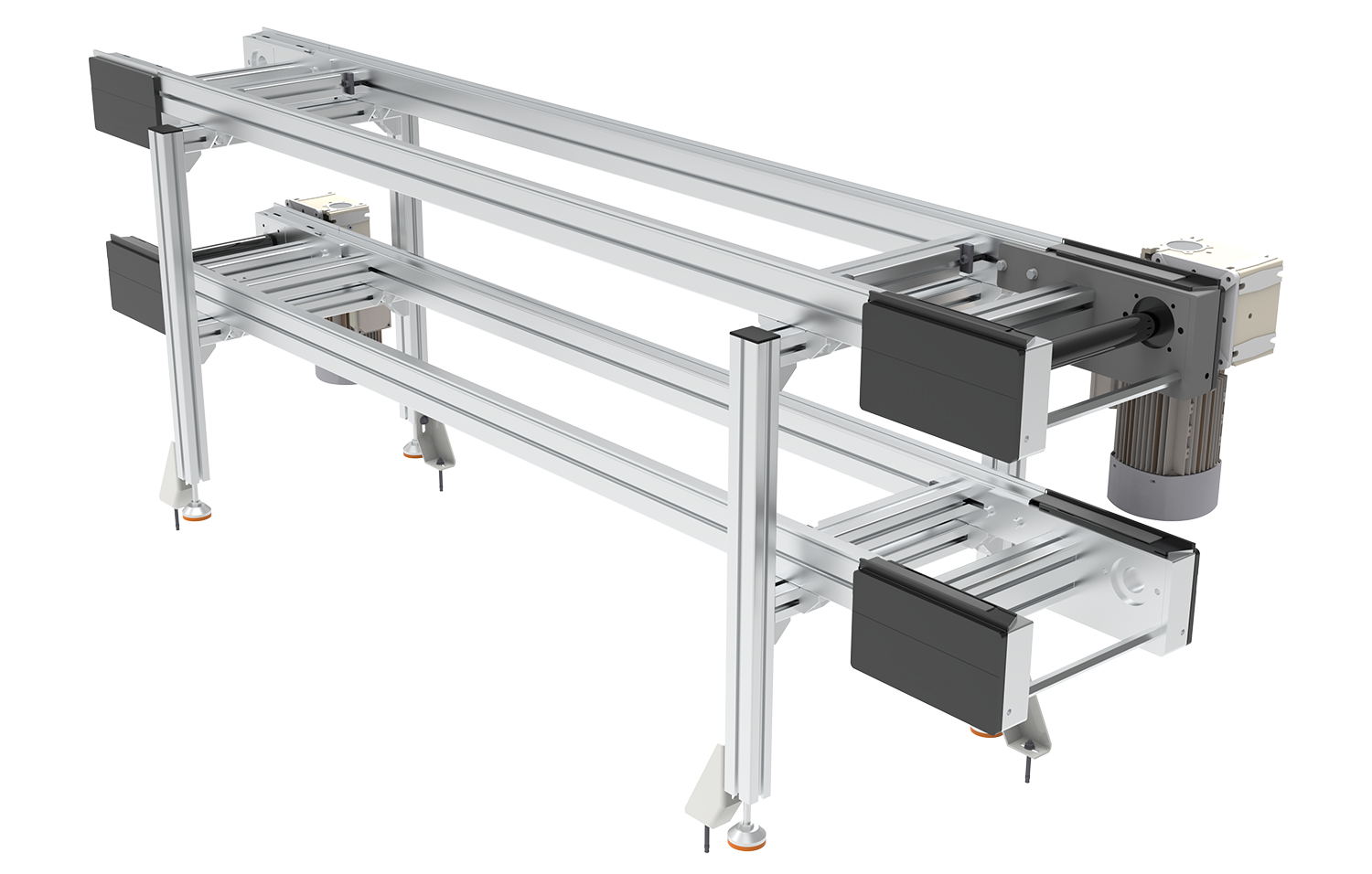
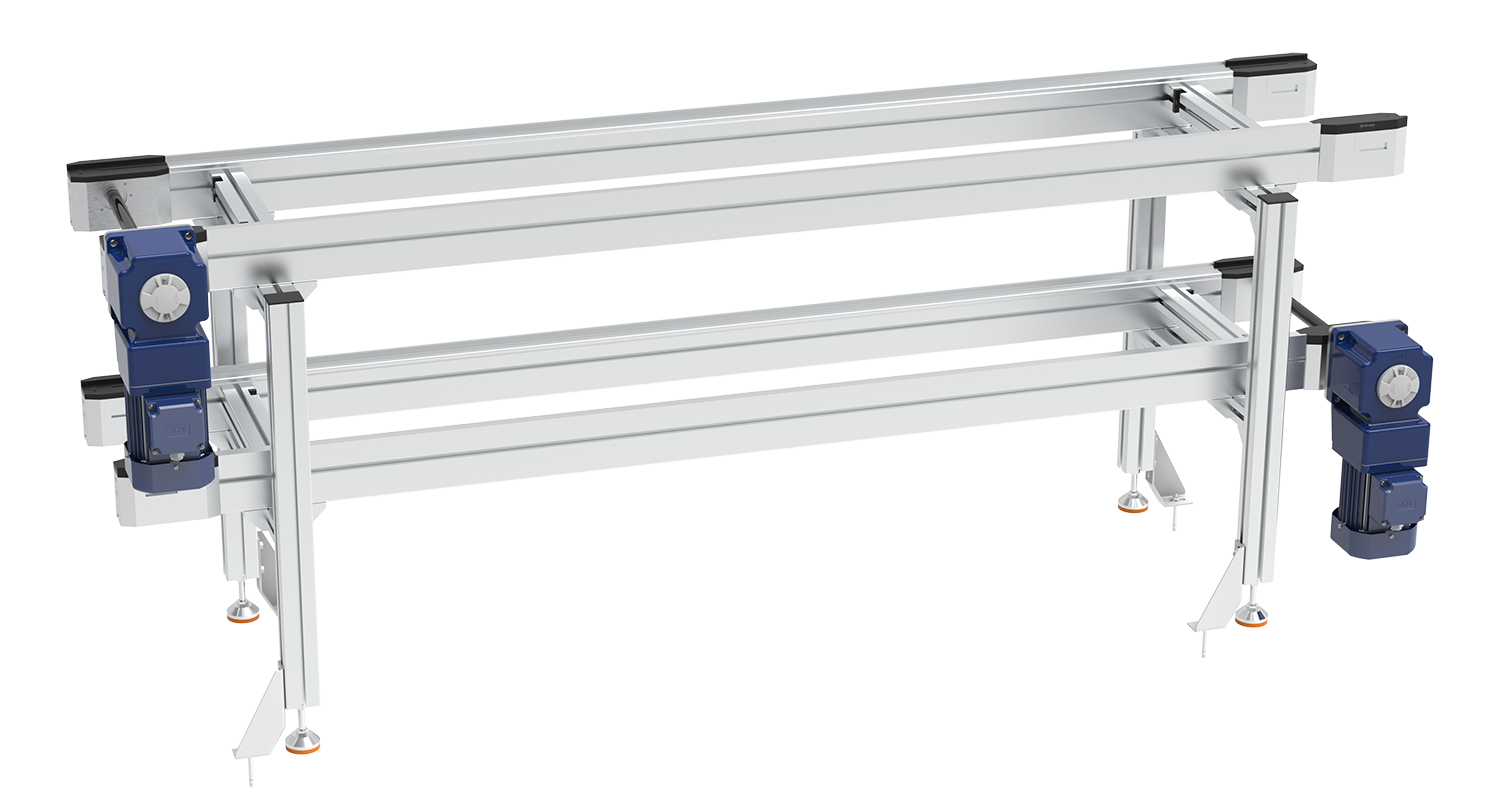
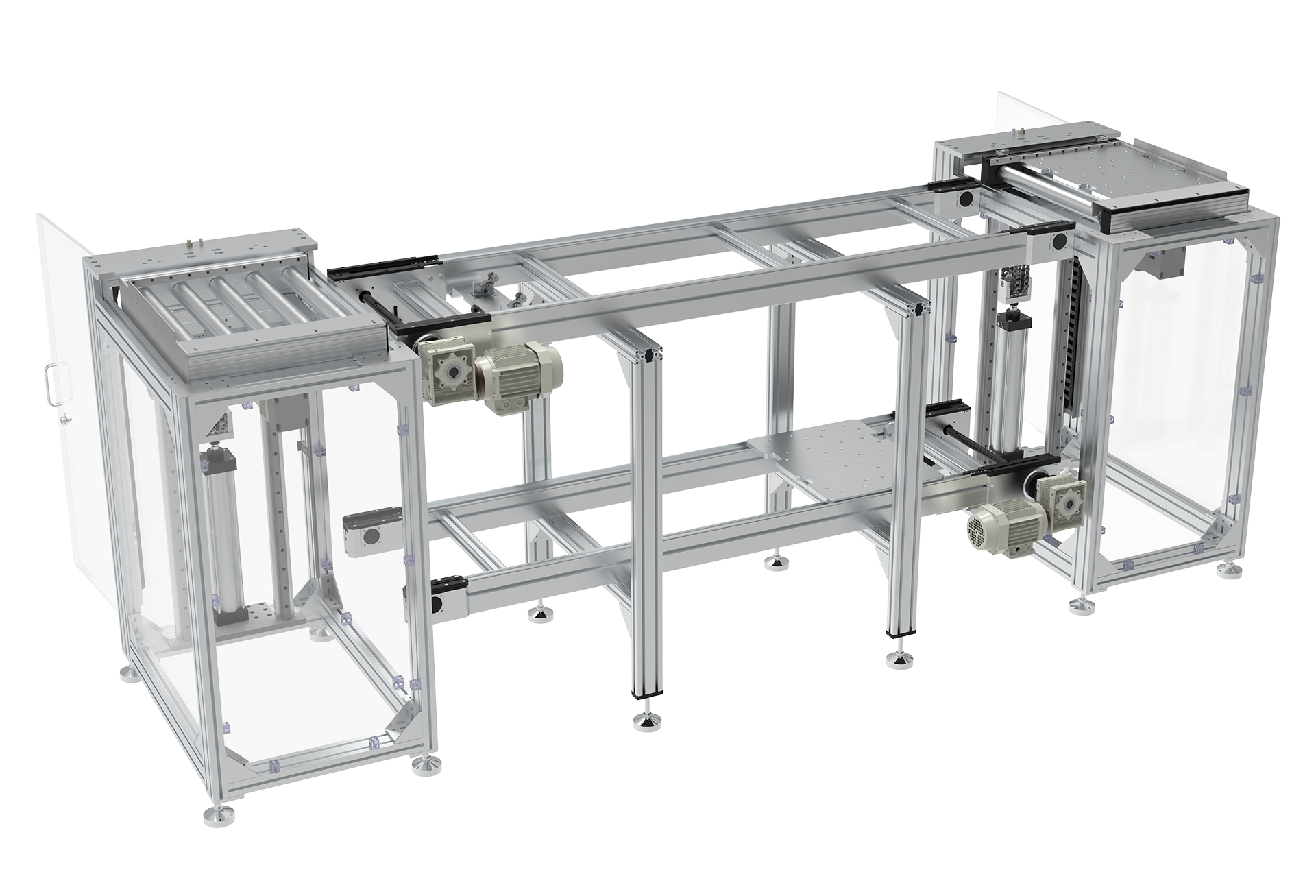
Het bovenste niveau wordt gebruikt voor montage en het transport van beladen pallets, terwijl het onderste niveau lege pallets retourneert. Hijsinstallaties, hijs- en overdraagunits of andere overdrachtsmechanismen verbinden de twee niveaus.
Dit ontwerp bespaart vloerruimte en zorgt voor automatische palletcirculatie, waardoor het geschikt is voor rechte assemblagelijnen.
De extra hef-, transport- en besturingsmechanismen verhogen echter ook de eisen voor beveiliging en storingstussenkoppeling.
Horizontale lustransportband
Pallets circuleren continu rond een horizontale lus. Deze opstelling is geschikt wanneer werkstations rond de transportband zijn geplaatst en wanneer takken, inspectieposten of herwerkgebieden kunnen worden toegevoegd.
Een lusopstelling is flexibel, maar neemt meestal meer vloerruimte in beslag en vereist meer draai- en transportmechanismen.
Er bestaat geen universeel beste opstelling. De juiste opstelling is die welke past bij het proces en de beschikbare fabrieksvloeroppervlakte.
 09 Is ESD-, stofbescherming of hittebestendigheid vereist?
Pallettransportbanden worden niet alleen gebruikt in gewone werkplaatsen.
Elektronica assemblage, batterijfabricage, precisie instrumenten, schone gebieden, hoge temperatuur processen en metaalbewerking creëren allemaal verschillende eisen aan materialen en structuur.
ESD-gevoelige omgevingen
Het vervangen van één onderdeel door een anti-statische keten is geen volledige ESD-oplossing.
Een volledig ESD-ontwerp kan ook vereisen dat:
Andere, met een breedte van niet meer dan 50 mm
Geschikte keten- en leidingsmaterialen
Een geleidingspad tussen de pallet en het transportvoertuig
Aarding van het aluminiumframe
Met een gewicht van niet meer dan 50 kg
Bescherming van elektrische onderdelen
Definitieve weerstandstest
ESD moet worden beschouwd als een systeemniveau-toepassingsvereiste, niet als een eigenschap van één geïsoleerd onderdeel.
Stof- en metaalspaansomgevingen
Het ontwerp moet rekening houden met kettingkanaalafdekkingen, spaanverwijdering, geleidingsschoonmaak en toegang voor onderhoud.
Het voortdurend binnendringen van aluminiumspaans, staalspaans of stof in het ketting- en tandwielgebied versnelt slijtage en kan uiteindelijk vastlopen veroorzaken.
Hoge-temperatuur omgevingen
De volgende punten moeten opnieuw worden beoordeeld:
Materiaal van ketting en rollen
Temperatuurgrenzen van slijtagestrips
Lubricatie methode
Plaatsing van motor en versnellingsbak
Temperatuurclassificatie van sensoren, buizen en kabels
Uitzetting van het frame en de pallets door temperatuurverandering
Een standaardwerkplaatsconfiguratie kan niet zonder aanpassing worden toegepast op elke bedrijfsomgeving.
10 Hoe worden motorvermogen en veiligheidsfactoren berekend?
Motorkiezen kan niet worden teruggebracht tot een regel zoals ‘een bepaald aantal watt per meter’.
De vereiste transportbandkracht moet minstens uit vier onderdelen bestaan:
Totale weerstand = wrijvingsweerstand + starttraagheid + hoogteverschilweerstand + extra weerstand
Voor een eerste schatting van een horizontale transportband:
Wrijvingsweerstand F₁ = μ × M × g
Waarbij:
μ is de equivalente wrijvingscoëfficiënt van de ketting, rollen en geleidingssysteem
M is de totale bewegende massa
g is de zwaartekrachtsversnelling
Starten introduceert ook traagheid:
Traagheidskracht F₂ = M × a
waarbij a de versnelling van de transportband is.
Bij beweging op een helling of bij hoogteveranderingen is een extra zwaartekrachtcomponent vereist. Ook opgestapelde pallets, kettingspanning, draaimechanismen, lagers en andere accessoires moeten worden meegenomen als extra weerstand.
Zodra de totale aandrijfkracht F is bepaald, kan het voorlopige vermogen worden berekend als:
Berekend vermogen P = F × v ÷ (1000 × η)
Waarbij:
P is in kW
F is de totale aandrijfkracht in N
v is de ketelssnelheid in m/s
η is het gecombineerde rendement van de motor, versnellingsbak, tandwiel en transmissiesysteem
De motor mag niet exact op de berekende waarde worden geselecteerd.
Er moet een servicefactor worden toegepast:
Geselecteerde motorvermogen ≥ berekend vermogen × servicefactor
De servicefactor is geen vast getal. Het hangt af van:
Frequentie van starten en stoppen
Continue bedrijfstijd
Volledige lijnaccumulatie
Bediening vooruit en achteruit
Stootbelastingen
Vereiste versnellingstijd
Omgevings temperatuur
Wisseling in de werkelijke belasting
Een voorlopige reserve van ongeveer 1,3 tot 1,5 kan geschikt zijn voor stabiele, continue transport. Frequent starten, zware accumulatie of wisselende belastingen kunnen een reserve van ongeveer 1,5 tot 2,0 vereisen. Toepassingen met zware belasting, stootbelasting of omkeerwerking vereisen afzonderlijke verificatie in plaats van een vaste factor.
De keuze van de motor moet ook verifiëren:
Uitgangskoppel van de versnellingsbak
Startkoppel
Koppel van de tandwielas
Motortoerental
Reductieverhouding
Thermische capaciteit
Start-stopfrequentie
Maximaal toegestane kettingspanning
Professionele methoden voor motorkiezen beoordelen traagheid, koppel en snelheid samen, terwijl methoden voor kettingkeuze de maximale kettingspanning, snelheidsfactoren en bedrijfsomstandigheden verifiëren.
Een te kleine motor kan mogelijk niet opstarten onder volledige belasting. Een onnodig grote motor kan de impact op de ketting, tandwielen en versnellingsbak vergroten. De juiste aanpak is om het gehele aandrijfsysteem op elkaar af te stemmen, in plaats van eenvoudigweg het motorvermogen te vergroten.
 Bereid deze informatie voor voordat u een pallettransportoplossing aanvraagt
Wanneer u een pallettransportmontagelijn bij Henton aanvraagt, helpt de volgende informatie ons bij het opstellen van een nauwkeuriger oplossing en offerte:
Productnaam, afmetingen en gewicht
Afmetingen, gewicht en materiaal van de pallet
Aantal producten per pallet
Doeloutput per minuut
Cyclusduur per werkstation
Vereiste transportbandlengte, -breedte en werkhoogte
Maximaal aantal opgestapelde pallets
Eisen voor stoppen, heffen en nauwkeurige positionering
Vereiste positioneringsnauwkeurigheid
Enkelvlakkige, dubbelvlakkige of lusvormige retourindeling
Werkomgeving en dagelijkse bedrijfsuren
Integratie met robots, inspectieapparatuur of besturingssystemen
Een pallettransportband lijkt misschien alleen een transportlijn te zijn, maar hij verbindt de productiecyclusduur, opspanmiddelen, automatiseringsapparatuur, operators en de fabriekslogistiek.
Een snelle offerte heeft weinig waarde als de technische parameters niet correct zijn gedefinieerd.
Henton ontwerpt geen pallettransportband door eenvoudig aluminiumprofielen en kettingen volgens lengte toe te voegen. Wij beoordelen de productbelasting, de productiecyclusduur, de accumulatiehoeveelheid, de positioneringsvereisten en de bedrijfsomgeving, en ontwerpen vervolgens de ketting, het frame, de pallet, de aandrijving en het besturingssysteem als één complete oplossing.
Klanten hebben geen transportband nodig die simpelweg beweegt.
Zij hebben een productielijn nodig die onder volledige belasting begint, zonder vastlopen accumuleert, nauwkeurig positioneert, betrouwbaar blijft functioneren over tijd en gelijk opgaat met de vereiste productiecapaciteit.