EN
EN

When choosing aluminum profiles for industrial projects, many buyers hesitate between 2020 aluminum profile and 4040 aluminum profile.
They look similar, use the same T-slot system, and are both widely used in automation and equipment frames — but in real projects, choosing the wrong one can lead to unnecessary cost or insufficient strength.
This article explains the practical differences, typical use cases, and how to choose the right size based on real application needs.
2020 aluminum profile refers to an extrusion with a 20 mm × 20 mm cross section, usually with standard T-slots on each side.
It is one of the most commonly used profiles in light-duty industrial structures.
Key characteristics of 2020 aluminum profile:
Compact size
Lightweight
Easy to assemble and modify
Compatible with standard T-slot accessories
Because of its small size and flexibility, 2020 is often used where space is limited or loads are relatively low.
4040 aluminum profile has a 40 mm × 40 mm cross section, offering significantly higher strength and rigidity.
Compared with 2020, it is designed for medium to heavy-duty structures that require better stability.
Key characteristics of 4040 aluminum profile:
Higher load capacity
Strong resistance to bending and vibration
Suitable for large frames and long spans
Often used as main structural beams
| Item | 2020 Aluminum Profile | 4040 Aluminum Profile |
|---|---|---|
| Cross section | 20 × 20 mm | 40 × 40 mm |
| Weight | Light | Heavier |
| Load capacity | Low to medium | Medium to high |
| Structural rigidity | Limited | Strong |
| Typical cost | Lower | Higher |
| Assembly difficulty | Very easy | Easy |
The difference is not only size, but how much deformation the structure can tolerate during long-term use.
In real applications, load capacity is often the deciding factor.
2020 aluminum profile is suitable for:
Small frames
Short spans
Static loads
Light automation modules
4040 aluminum profile is better for:
Long spans
Dynamic loads
Equipment frames with vibration
Safety-critical structures
A common mistake is choosing 2020 for a frame that “just meets” the load requirement.
Over time, vibration and fatigue may cause deformation or loosened connections.
Small conveyor frames
Sensor mounts and brackets
Light workstations
Test fixtures
Enclosures for electronics
Conveyor main frames
Machine bases
Automation equipment structures
Heavy workbenches
Robot frames
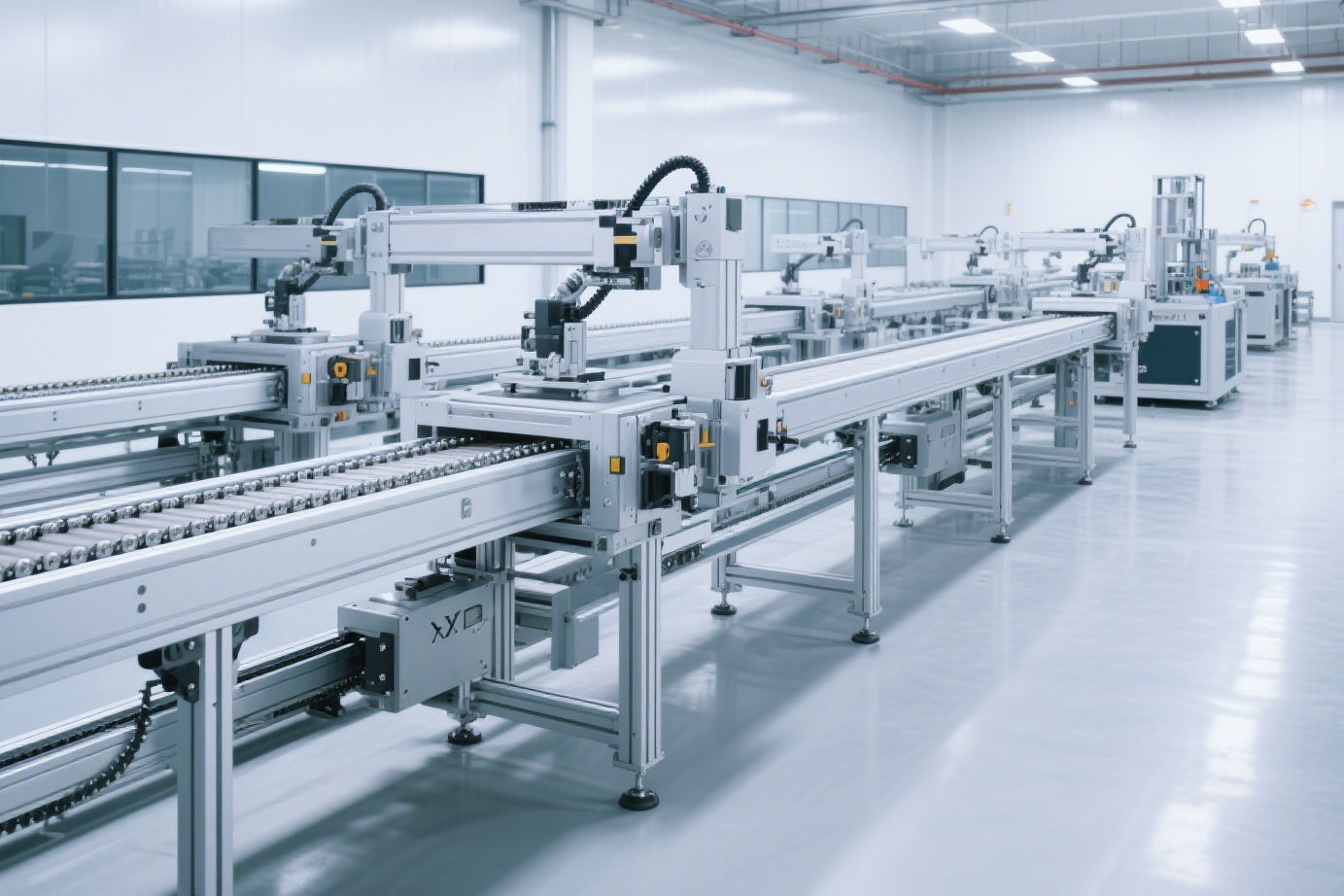
In many projects, 2020 and 4040 are used together, with 4040 as the main load-bearing structure and 2020 for auxiliary components.
Instead of only looking at size, ask these practical questions:
What is the total load, including future expansion?
Is the load static or dynamic?
How long is the unsupported span?
Will the structure experience vibration?
Is safety or long-term stability critical?
If the answer involves uncertainty, choosing 4040 usually provides more margin and reduces future risk.
Choosing 2020 only because it is cheaper
Ignoring dynamic loads and vibration
Not considering future upgrades
Using 2020 for long-span structures
Mixing incompatible accessories
These mistakes often lead to redesign or reinforcement later, which costs more than choosing the correct profile from the beginning.
Can 2020 aluminum profile replace 4040?
In light-duty applications, yes. For structural frames, usually no.
Is 4040 aluminum profile harder to assemble?
Not significantly. Assembly principles are the same, only components are larger.
Can I combine 2020 and 4040 in one project?
Yes. This is very common in automation and conveyor systems.
Does surface treatment affect strength?
Surface treatment mainly affects corrosion resistance and appearance, not structural strength.
Both 2020 and 4040 aluminum profiles are reliable and widely used in industrial applications.
The key is understanding where strength matters and where flexibility is enough.
Choosing the right aluminum profile size at the design stage helps improve safety, reduce maintenance, and avoid unnecessary costs during operation.
If you are planning an automation or conveyor project, evaluating the structure as a whole — instead of individual parts — will lead to better long-term results.