EN
EN

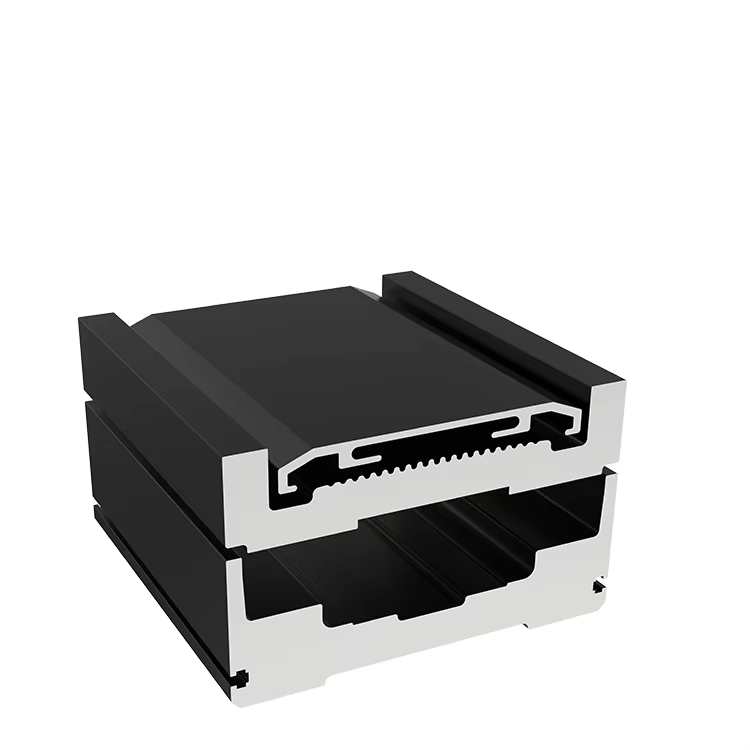
Core Working Principles of a Linear Sensor
Linear sensors convert physical displacement into measurable electrical signals through precise engineering. Their accuracy hinges on two interdependent stages: transduction and signal processing.
Transduction Mechanisms: Resistive, Capacitive, Inductive, and Magnetostrictive
Each mechanism translates displacement uniquely:
- Resistive sensors use sliding contacts on a resistive element—simple and cost-effective, but subject to wear over time (typical linearity: ±0.1%).
- Capacitive designs measure changes in plate separation, delivering micron-level resolution in controlled, clean environments.
- Inductive variants detect inductance shifts from ferromagnetic targets, making them robust for harsh industrial use.
- Magnetostrictive types rely on timed magnetic pulses along a waveguide, enabling non-contact operation with high repeatability (±0.01% FS accuracy).
Signal Conditioning and High-Fidelity Digital Conversion for Linear Sensor Accuracy
The raw signals from transducers need several steps before they're useful - basically, we have to amplify them, filter out unwanted noise, and straighten out their nonlinear characteristics. Today's sensor designs often come with built-in ASIC circuits that handle temperature compensation and correct hysteresis issues right at the source. These circuits work on the analog signal first before it gets converted into digital form through those high resolution 24 bit ADCs. Maintaining this complete signal processing path is what keeps the system accurate within about plus or minus 0.05% full scale. That kind of precision matters a lot in industries like semiconductor manufacturing or robotic assembly lines where even tiny variations below a micron can make all the difference between good products and rejects.
Key Factors That Impact Linear Sensor Accuracy
Mechanical Influences: Mounting Alignment, Target Surface Finish, and Mechanical Hysteresis
When mounting components, angular misalignment creates what we call cosine errors. These errors can jump above 0.5% even at just 5 degrees of misalignment, which means there's really no choice but to use rigid fixtures that are properly aligned. The surface finish on targets makes a big difference too. Coarse metal surfaces actually reduce the resolution of inductive sensors by around 15% compared to those shiny polished ones. Mechanical hysteresis refers to how the sensor outputs differ depending on whether it approaches a position from one side or the other. Good quality sensors manage this issue pretty well, keeping differences below 0.05% full scale thanks to their low friction guidance systems and carefully designed springs. Mounting hardware that resists vibrations helps maintain consistent contact pressure and produces measurements that stay reliable across multiple tests.
Environmental Challenges: Temperature Drift, EMI Immunity, and Vibration Resilience
When temperatures change, both the sensor parts themselves and their mounting hardware expand differently. The good news is that modern sensors come with built-in compensation circuits that keep measurement drift within just ±0.01% across a wide 50 degree Celsius range. In industrial settings, electromagnetic interference can really mess with analog signals. To combat this problem, engineers typically combine several approaches like using shielded cables, implementing differential signal transmission methods, and applying digital filters. These combined techniques usually achieve around 80 decibels of noise reduction or better. For structural strength, manufacturers incorporate special dampers and design assemblies that minimize internal stress points. This allows the sensors to survive pretty harsh conditions including shocks of up to 10g while maintaining position accuracy below 2 micrometers. And let's not forget about protection against moisture. With IP67 rated seals in place, there's no risk of condensation forming inside the device, which means these sensors will keep performing reliably even after years of exposure to water jets or outdoor weather conditions.
Calibration, Verification, and Traceable Accuracy Testing for Linear Sensors
NIST-Traceable Calibration and ISO/IEC 17025-Compliant Validation Protocols
When we talk about NIST traceable calibration, what we're really referring to is creating a clear path from our linear sensors all the way back to those standard international units. This kind of traceability keeps our displacement measurements accurate within specific limits throughout their entire working range. Calibration labs need to follow certain rules too. They must comply with ISO/IEC 17025 standards which basically means they have to prove they know what they're doing technically and manage quality properly. These standards ask for actual numbers on how uncertain our measurements might be, plus regular checks on everything from equipment condition to staff skills. All these requirements give us real confidence that our sensors are meeting internationally accepted standards for accuracy.
Selecting the Right Linear Sensor for High-Accuracy Applications
When selecting a linear sensor for those really critical precision jobs in areas like robotics or semiconductor production, there are basically three things worth focusing on: how straight the measurements stay (linearity specs), whether it can handle rough conditions, and if it's easy to calibrate properly. Start by looking at linearity tolerance first. Something around ±0.05% full scale or better will generally give repeatable results down to the micrometer level. Next check how stable the sensor behaves when things get tough. The temperature coefficient should be no worse than ±0.005% per degree Celsius, and IP67 rating is pretty much mandatory for places where oil or dirt might get everywhere. Capacitive or magnetostrictive sensors tend to work best here since they don't need complicated calibration procedures. Most times just two points are enough instead of going through all those multi-point adjustments. For super fine work in medical devices or similar fields, insist on seeing actual ISO/IEC 17025 certificates showing proper EMI shielding and resistance to vibrations. Get this right and most systems achieve over 99.8% accuracy in quality checks and aerospace measurements where even tiny errors can mean big problems for safety standards and overall performance.