EN
EN

Core Profile Types and Structural Configurations of Standard Aluminum Extrusion Shapes
Fractional vs. Metric Series: U, C, Hat, T, Z, Angle, Channel, and I-Beam Profiles
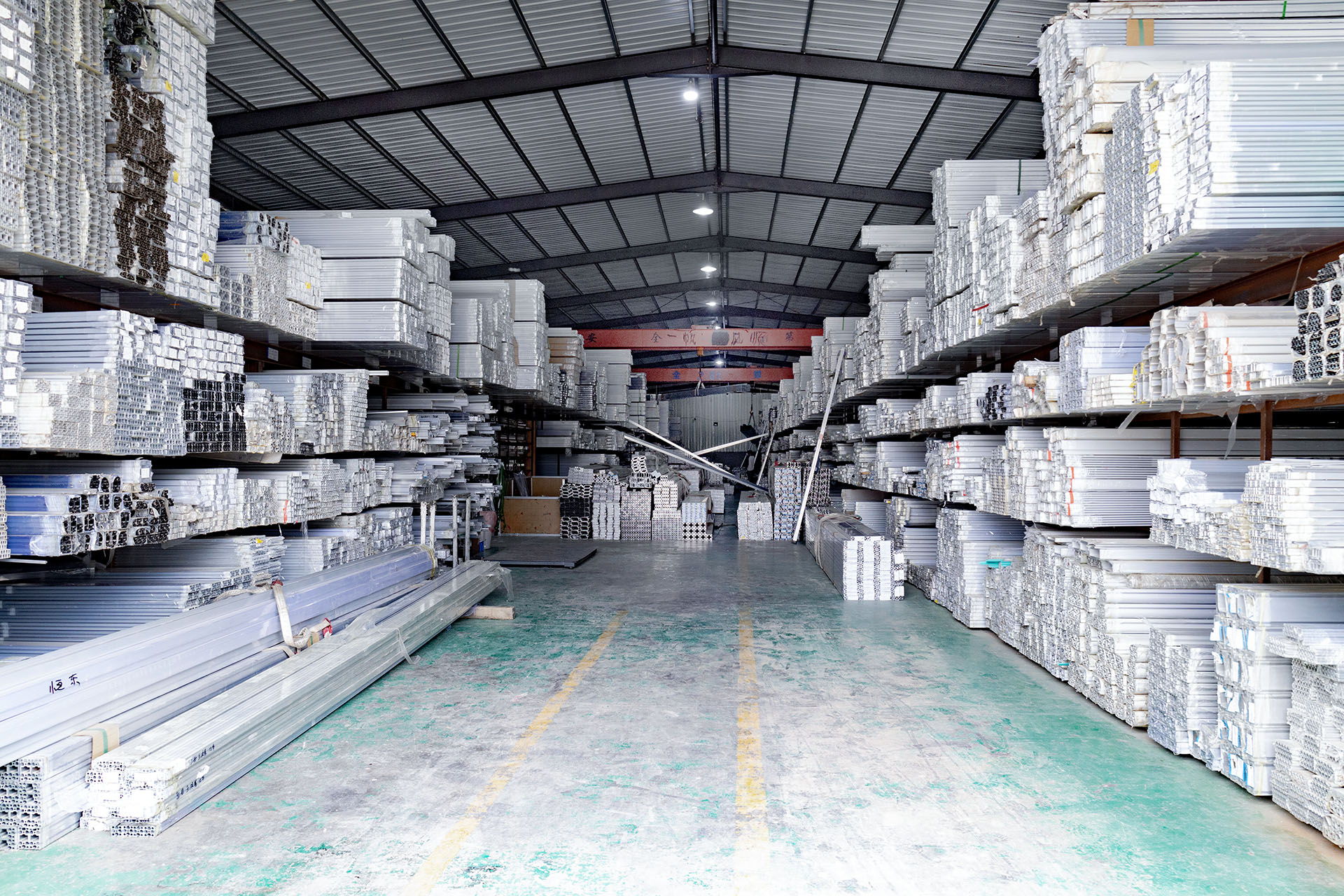
Aluminum extrusions come in two main measurement systems these days: fractional inches for older US markets and metric millimeters for most everywhere else. Each type serves different purposes depending on where they're used. Let's take a quick look at some common shapes. U-channels are great for protecting edges and creating mounting points. The C-shape is basically what holds together those modular framing systems we see everywhere. Hat sections spread out weight over larger areas, which makes them useful in many structural applications. T-profiles have those handy slots built right in, so people can assemble things without needing special tools. Z-profiles handle those tricky angled connections when alignment matters most. Angles give strong 90 degree support wherever needed. Open channels provide sturdy yet accessible frames for enclosures and other support structures. And let's not forget I-beams, which stand tall against heavy loads while using less material than alternatives. Most engineers go with metric profiles nowadays because they work better with international equipment specs and follow ISO/DIN standards. But plenty of old installations still use the fractional system in North America. Standardizing dimensions really speeds things up for manufacturers working on robotics setups, conveyor belts, and safety fencing projects. Some companies report cutting their installation time by around 40% thanks to this consistency.
Solid, Hollow, and Semi-Hollow Cross-Sections: Trade-offs in Weight, Rigidity, and Fabrication Efficiency
Three fundamental cross-section types serve complementary engineering roles:
- Solid profiles (e.g., bars, rods) deliver maximum stiffness and machining flexibility but weigh 40–60% more than hollow alternatives—making them ideal for high-stress pivot points and precision fastener integration.
- Hollow profiles (e.g., square/rectangular tubes, closed beams) cut mass by 30–50% while preserving torsional rigidity through fully enclosed geometries—widely used in mobile frames, lifting arms, and portable workstations where weight-to-strength ratio is paramount.
- Semi-hollow profiles (e.g., angles, channels, Ts) balance cost-efficiency and functionality: their open sections simplify welding, drilling, and mechanical joining, though they require 15–25% thicker walls than hollow equivalents to match moment-of-inertia performance—suited for structural bracing, non-critical enclosures, and support rails.
Extruders optimize wall thickness strategically: ¥3 mm at load-bearing zones (e.g., mounting flanges, slot bases) ensures integrity under dynamic stress, while non-critical surfaces taper to 1–1.5 mm—improving extrusion speed by ~15% versus uniform-thickness designs.
Material Specifications and Dimensional Standards for Standard Aluminum Extrusion Shapes
6063-T6 Alloy: Why It Dominates — Mg/Si Ratio, Strength Metrics (210 MPa UTS), and Tempering Rationale
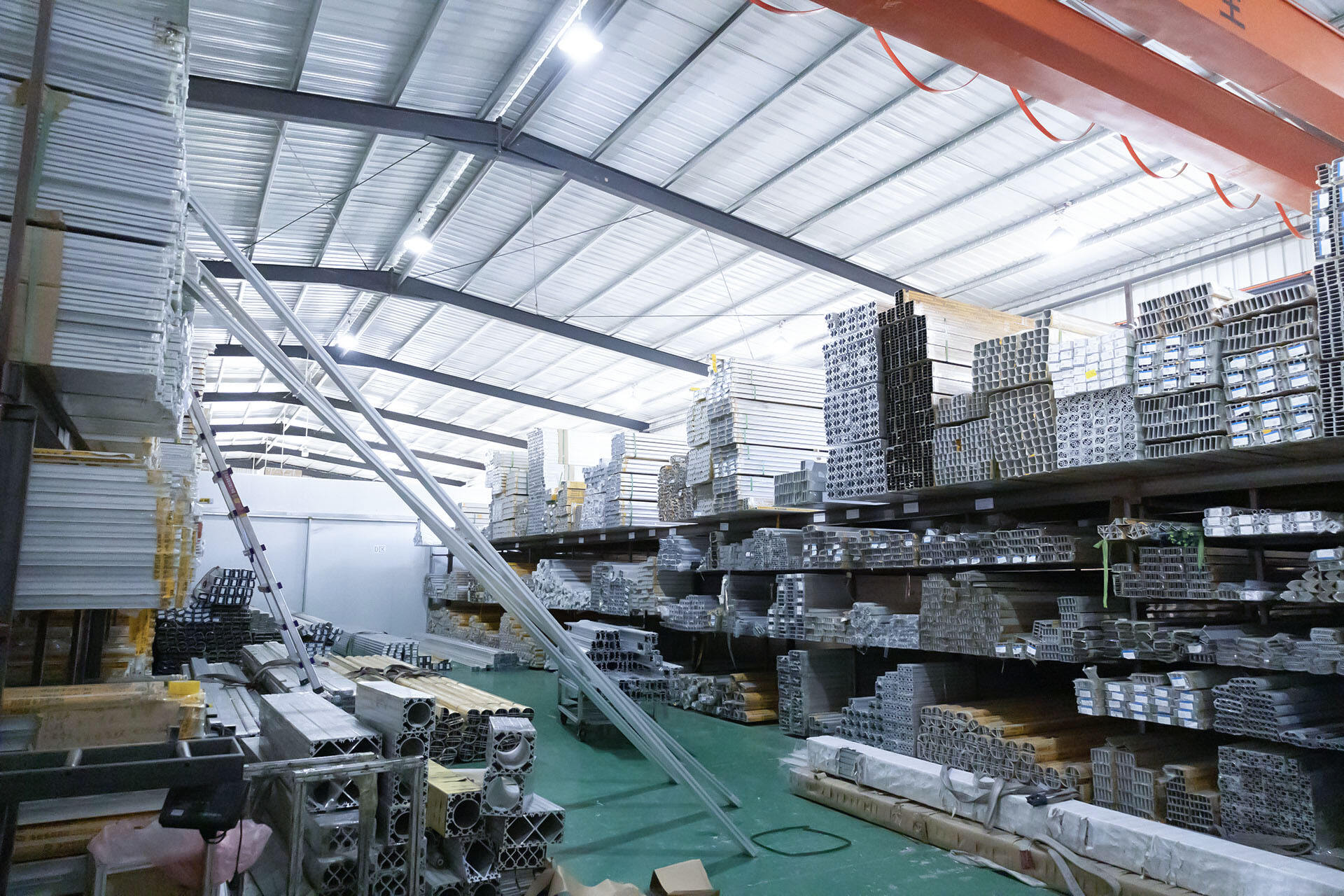
Alloy 6063-T6 has become the go to choice for most standard aluminum extrusion work because of its pretty good balance between magnesium and silicon content around 1.73 ratio. This makes it really easy to extrude while still maintaining consistent mechanical properties across different batches. When processed in the T6 condition, which involves heating to about 520 degrees Celsius and then artificially aging the material, we get a tensile strength of approximately 210 MPa with a yield strength variation of plus or minus 10 MPa. These specs are important since they ensure structures behave predictably under load. The T6 treatment actually creates more dislocations in the metal structure, making it about 40 percent less likely to crack from stress corrosion than the T5 version. Plus, this alloy works well when welding and responds consistently during anodizing processes. Because of all these qualities, manufacturers rely on 6063-T6 for things like building frames, window systems in commercial buildings, and even components used in cleanrooms where reliability is absolutely critical.
Critical Tolerances: Slot Widths (6–10 mm), Inside Radii (R0.5–R2.0), Max Stock Length (7.3 m), and Cross-Sectional Limits
Getting precision right in extrusion manufacturing really comes down to keeping those dimensions tight. The slot widths need to stay within 6 to 10 mm plus or minus 0.1 mm. For the inside corners, we generally keep them between radius 0.5 and radius 2.0 to prevent stress points from forming. When it comes to stock length, most manufacturers stick around 7.3 meters max because longer pieces tend to bow during transport. And the cross section shouldn't exceed 200 square centimeters if possible, since bigger sections won't fit into regular extrusion presses. Most shops follow ANSI H35.2 as their main guideline, but there are also regional standards like JIS H4100 that work pretty much the same way. These standards basically set out what kind of tolerances are acceptable depending on how complex the profile shape actually is.
| Parameter | Simple Profile | Complex Profile |
|---|---|---|
| Width Tolerance | ±0.3% | ±0.15% |
| Thickness Variance | ±0.2 mm | ±0.1 mm |
| Straightness | ¤0.5 mm/m | ¤0.2 mm/m |
Even minor deviations carry real consequences: a 0.5 mm slot misalignment can degrade joint strength by 30% in multi-profile assemblies. Certified suppliers therefore validate dimensions using laser-scanning CMMs prior to shipment.
T-Slot Compatibility and Modular Integration Across Standard Aluminum Extrusion Shapes
Standard aluminum extrusion systems rely on T-slot geometry to enable rapid, reconfigurable assembly. These inverted “T”-shaped channels allow hardware to slide, lock, and reposition along the full profile length—eliminating the need for custom machining or permanent welds.
Standard T-Slot Geometries (6–6 mm, 8–8 mm, 10–10 mm) and Alignment with ISO 10983/DIN 69051
The industry has pretty much settled on three standard slot dimensions these days. There's the small 6x6 mm size mainly used for light duty stuff like lab benches and smaller fixtures. Then we get to the middle ground with 8x8 mm slots that work well for most structural frames and general assembly needs. For heavier applications where things need to hold real weight, the big boys go with 10x10 mm slots on machinery bases and load bearing platforms. These all follow the ISO 10983 and DIN 69051 specs which means parts from different manufacturers actually fit together without problems. This standardization makes life easier because companies don't have to stockpile special fasteners anymore. Inventory management becomes simpler and prototype testing takes less time since everything works together out of the box. The manufacturing process keeps tolerances within about 0.2 mm for both depth and width measurements. That tight control ensures bolts, T nuts, and various accessories will fit properly no matter who made them, which saves headaches during installation.
Modular Assembly: Brackets, Inserts, and Panel Mounting Systems for Single/Double/Quad Profiles
T-slot versatility is realized through purpose-built components:
- Brackets enable rigid angular connections—45°, 90°, and 180°—without welding or drilling.
- T-nuts and threaded inserts lock into slots to secure panels, sensors, motors, or linear actuators with repeatable torque values.
- Panel mounts use adjustable clamps to affix polycarbonate, aluminum, or steel sheets to single, double, or quad-profile configurations.
Quad-profile assemblies support multi-tier workbenches, inspection stations, and automated cell partitions. Tool-free disassembly allows full system repurposing within hours—cutting material waste by 30% compared to welded alternatives and supporting circular-economy practices.
High-Value Industrial Applications of Standard Aluminum Extrusion Shapes
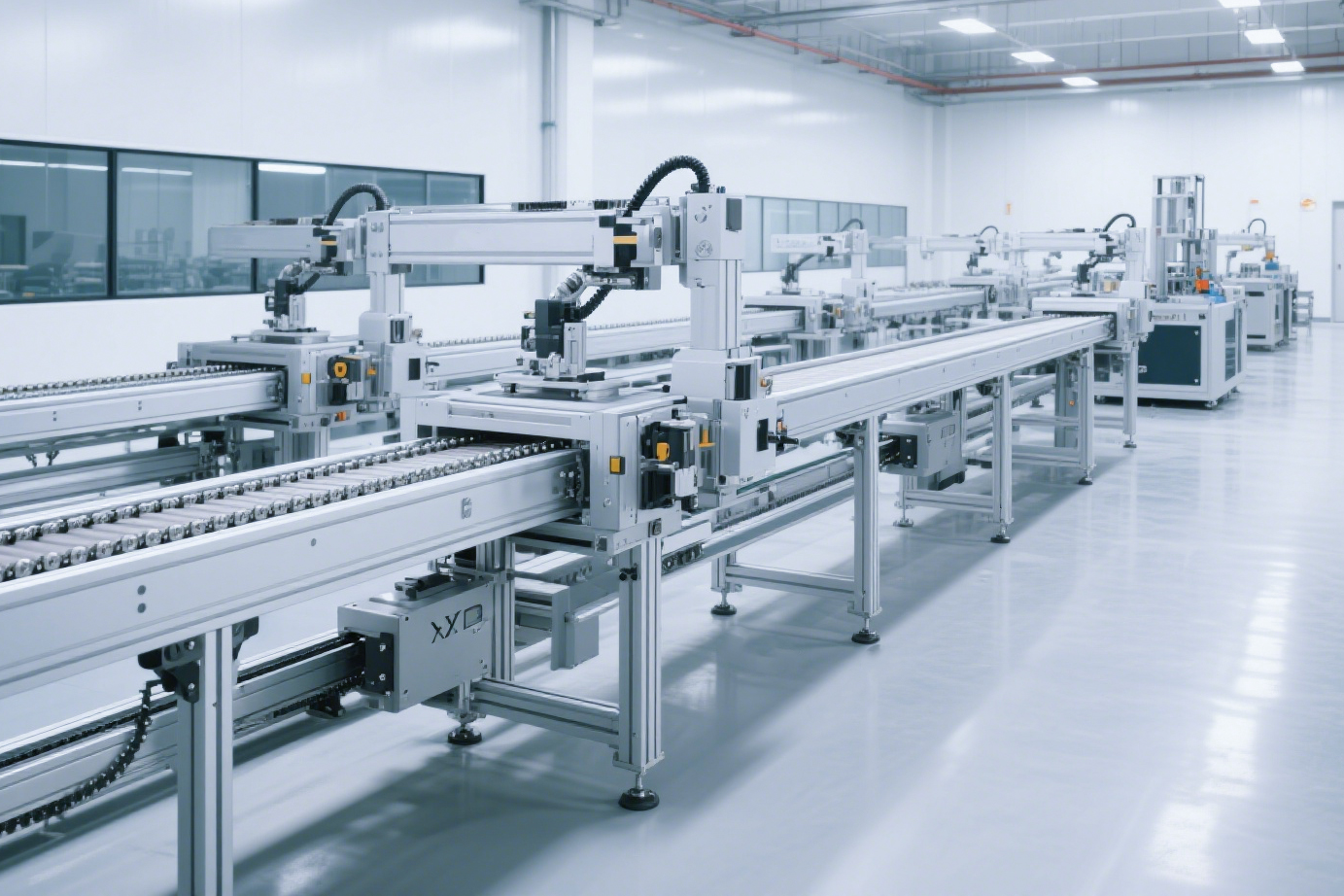
Automation & Machinery: Robotic Frames, Conveyor Supports, and Ergonomic Lift Platforms
Standard aluminum extrusions accelerate automation deployment through performance and adaptability:
- Robotic workcells use 6063-T6 profiles to build vibration-damped, dimensionally stable frames—maintaining positional accuracy under cyclic loading and thermal drift.
- Modular conveyor supports integrate seamlessly with T-slot systems (6–6 mm to 10–10 mm), enabling layout adjustments in minutes—not days—without recalibration.
- Ergonomic lift platforms leverage hollow extrusions to reduce structural mass by up to 50%, lowering actuator demand and cutting energy use by as much as 30% versus equivalent steel designs.
Aluminum’s natural corrosion resistance, non-magnetic properties, and ease of surface finishing further enhance reliability in high-cycle, mixed-environment production settings.
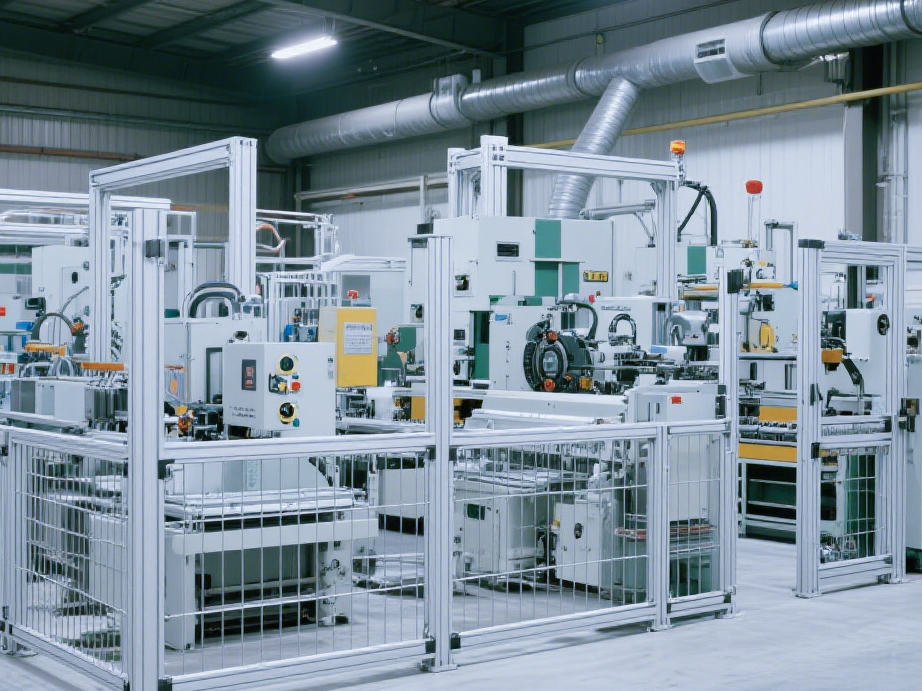
Safety-Critical Installations: ISO 14120-Compliant Machine Guarding and Safety Fencing
For personnel and equipment protection, extrusions meet rigorous safety standards with engineered flexibility:
- Reinforced I-beam and channel profiles satisfy ISO 14120 impact-force requirements—withstanding 1,000 N static loads and dynamic impacts up to 50 J without deformation.
- Modular fencing systems deploy tool-less panel mounting, allowing hazard-zone reconfiguration during scheduled maintenance—avoiding unplanned line stoppages.
- Conductive aluminum profiles support integrated EMI shielding and low-impedance grounding paths—critical for safeguarding PLCs, vision systems, and human-machine interfaces in electrically noisy environments.
Table of Contents
- Core Profile Types and Structural Configurations of Standard Aluminum Extrusion Shapes
- Material Specifications and Dimensional Standards for Standard Aluminum Extrusion Shapes
- T-Slot Compatibility and Modular Integration Across Standard Aluminum Extrusion Shapes
- High-Value Industrial Applications of Standard Aluminum Extrusion Shapes