EN
EN

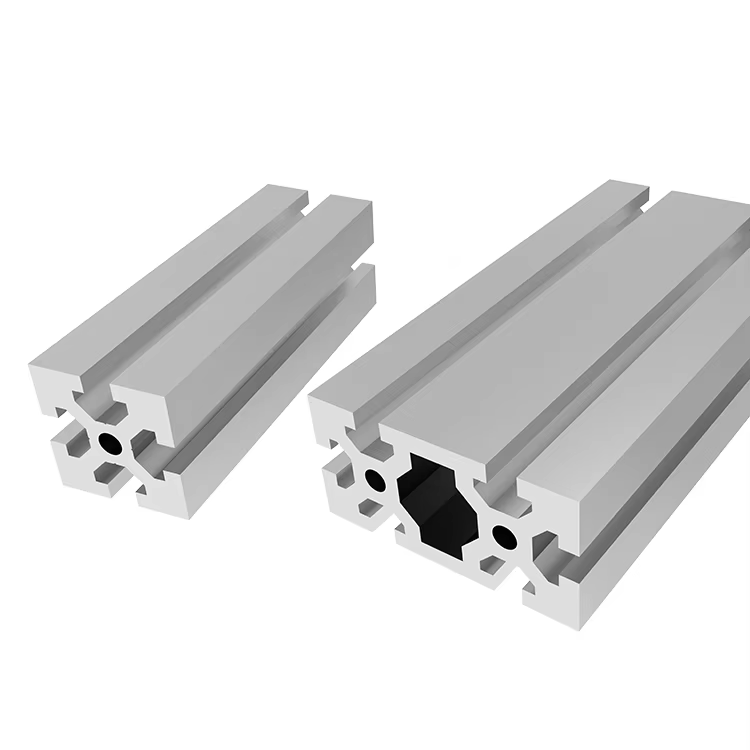
Core Standardization Frameworks for T Slot Aluminum Extrusion Profiles
ISO, DIN, and ANSI Dimensional Standards (20–20 mm to 80–80 mm) and Interchangeability Across Suppliers
| Standardization Benefit | Impact Metric | Implementation Scope |
|---|---|---|
| Cross-supplier compatibility | 100% interchangeability | Global manufacturing |
| Inventory reduction | 30% cost savings | Industrial facilities |
| Tolerance precision | ±0.1 mm dimensional accuracy | 20–80 mm profiles |
Slot Geometry Consistency: Why 6 mm and 8 mm T-slot widths dominate global fabrication ecosystems
Most engineers agree that 6 mm and 8 mm T-slots have become standard sizes because they strike a good balance between several important factors. They maintain enough material strength with walls at least 2 mm thick, work well with most accessories, and are relatively easy to machine. These slot widths fit more than 90 percent of common industrial fasteners and T-nuts found throughout Europe, North America, and parts of Asia. The smaller 6 mm slots are great for lighter applications where precision matters a lot, such as mounting sensors or building lab equipment. On the other hand, the bigger 8 mm slots handle heavier loads better, making them ideal for things like conveyor frames or robotic work cells. What makes these sizes really useful is that their T-nuts follow standard shapes and torque requirements, so components just snap together without needing special adjustments. According to recent studies from 2024 looking at how factories operate, this standardization cuts down on assembly time by about 40%. Plus, companies don't need to invest in new tools when expanding production or adapting designs for different markets around the world.
Modular Adaptability: How Standard T Slot Aluminum Extrusion Profiles Enable Rapid System Reconfiguration
Plug-and-Play Accessories — Brackets, T-nuts, and Covers — Designed for Universal Slot Compatibility
When slot geometry becomes standardized across industrial systems, it opens up a whole world of modular possibilities through accessories built to fit universally. Think brackets, T-nuts, end caps, connectors all made specifically for those common 6mm and 8mm slots. These components just slide into place, tighten down securely, and stay put without needing any special adjustments or custom parts. The beauty here is that this standardization actually frees companies from being tied to one particular supplier while making system changes much quicker. Engineers can move things around simply by loosening some bolts and sliding components along the frame profiles. They can also expand their structures later on using exactly the same parts that were available when they first installed everything. And best of all, frames can be adapted for new equipment like sensors or panels without buying entirely new hardware. About 85% of industrial accessories now follow these standard slot sizes, which means factories save money on expensive custom machining jobs and don't have to stockpile tons of different spare parts. Real-world results speak volumes too. Plants report modifications happening roughly 70% faster compared to traditional welding methods. Some facilities even completely reconfigure production lines during shift changes thanks to this flexibility. And because everything comes apart so easily, old frames get reused instead of ending up in landfills, extending their useful life and cutting down on wasted materials.
On-Demand Fabrication: Precision Cutting and Field Deployment of Standard T Slot Aluminum Extrusion Profiles
CNC Cutting Tolerances (±0.1 mm) and Global Supplier Readiness for Just-in-Time Profile Delivery
Profiles that follow standard specifications work great for making things with high precision and scaling up production. When using CNC cutting machines, we can maintain really tight tolerances around 0.1 mm, which matches what those big industry standards like ISO, DIN, and ANSI require. This means when parts get cut, they fit right into their connectors and hardware without any problems. And because there are already well-established shipping networks around the world, companies can count on getting these pre-cut profiles delivered just when needed. According to research done last year by Ponemon Institute, this approach cuts down waiting periods by about 70% over traditional methods where everything gets made specifically for each order. Manufacturers love this since it lets them adjust their assembly lines pretty quickly, sometimes within three days, so they don't waste money having equipment sit idle while waiting for parts.
Case Study: Automotive Prototype Fixture Redeployed in Under 48 Hours Using Off-the-Shelf T Slot Aluminum Extrusion Profiles
When an automotive research and development group faced the challenge of adapting a prototype test fixture for their latest powertrain validation tests, they turned to a smarter approach. Instead of starting from scratch, the team used standard 40x40 mm profile frames along with those handy 8 mm universal slots that come built-in. They threw in some spare brackets, T-nuts, and corner connectors lying around the workshop and had the whole structural framework assembled within two days flat. Best part? No need to order special components, do any welding work, or spend time on recalibrations. This smart reuse strategy saved the company about $34k compared to what it would have cost to build everything from scratch using traditional machining methods. What's really interesting here is how sticking with standard parts actually made things faster while still maintaining all the necessary strength and consistency requirements for proper testing procedures.
Performance Validation: Why Standardized T Slot Aluminum Extrusion Profiles Deliver Reliable Strength and Durability
T-slot aluminum extrusions come in standard profiles that have proven their worth time and again because manufacturers stick closely to specific production standards and material requirements. Take Alloy 6061-T6 for instance, which is probably the go-to choice for most applications. It can handle tensile strength over 35,000 psi but weighs only about a third of what similar steel sections would weigh. Frame systems built with these standardized components can easily carry industrial loads exceeding 1,500 pounds per linear foot without any noticeable bending or structural issues. Many factories rely on this combination of strength and lightweight properties when building equipment frames and support structures.
When it comes to resisting corrosion, these anodized profiles really hold their own. They've been put through the standard salt spray test (ASTM B117) and show minimal wear at under 0.001 mm per year loss. That kind of durability means they can last well over two decades, even when exposed to harsh coastal conditions or areas with high humidity levels. What makes this possible? Standard manufacturing processes ensure walls stay consistently thick within a tight range of plus or minus 0.15 mm. The slots are also made precisely the same way each time. This attention to detail prevents those annoying stress points that cause regular products to break down much sooner than expected.
Testing for fatigue shows these systems are reliable over time. Standardized T-slot assemblies can handle more than half a million load cycles at around two-thirds of their maximum strength before showing any signs of wear. The main reason behind this durability? Dimensional consistency across all components eliminates those pesky tolerance issues that plague multi-part joints. Plus, aluminum itself dampens vibrations naturally, which adds another layer of protection against stress points. When subjected to constant movement or repeated loads, standard systems keep their structural integrity intact while many custom builds or poorly specified alternatives start developing tiny cracks or loose bolts after just a few months in service.
Table of Contents
- Core Standardization Frameworks for T Slot Aluminum Extrusion Profiles
- Modular Adaptability: How Standard T Slot Aluminum Extrusion Profiles Enable Rapid System Reconfiguration
- On-Demand Fabrication: Precision Cutting and Field Deployment of Standard T Slot Aluminum Extrusion Profiles
- Performance Validation: Why Standardized T Slot Aluminum Extrusion Profiles Deliver Reliable Strength and Durability