EN
EN

How Aluminium Extrusion Machinery Enables Precision Profile Shaping
The Extrusion Phenomenon: Transforming Solid Billets into Complex Cross-Sections in Seconds
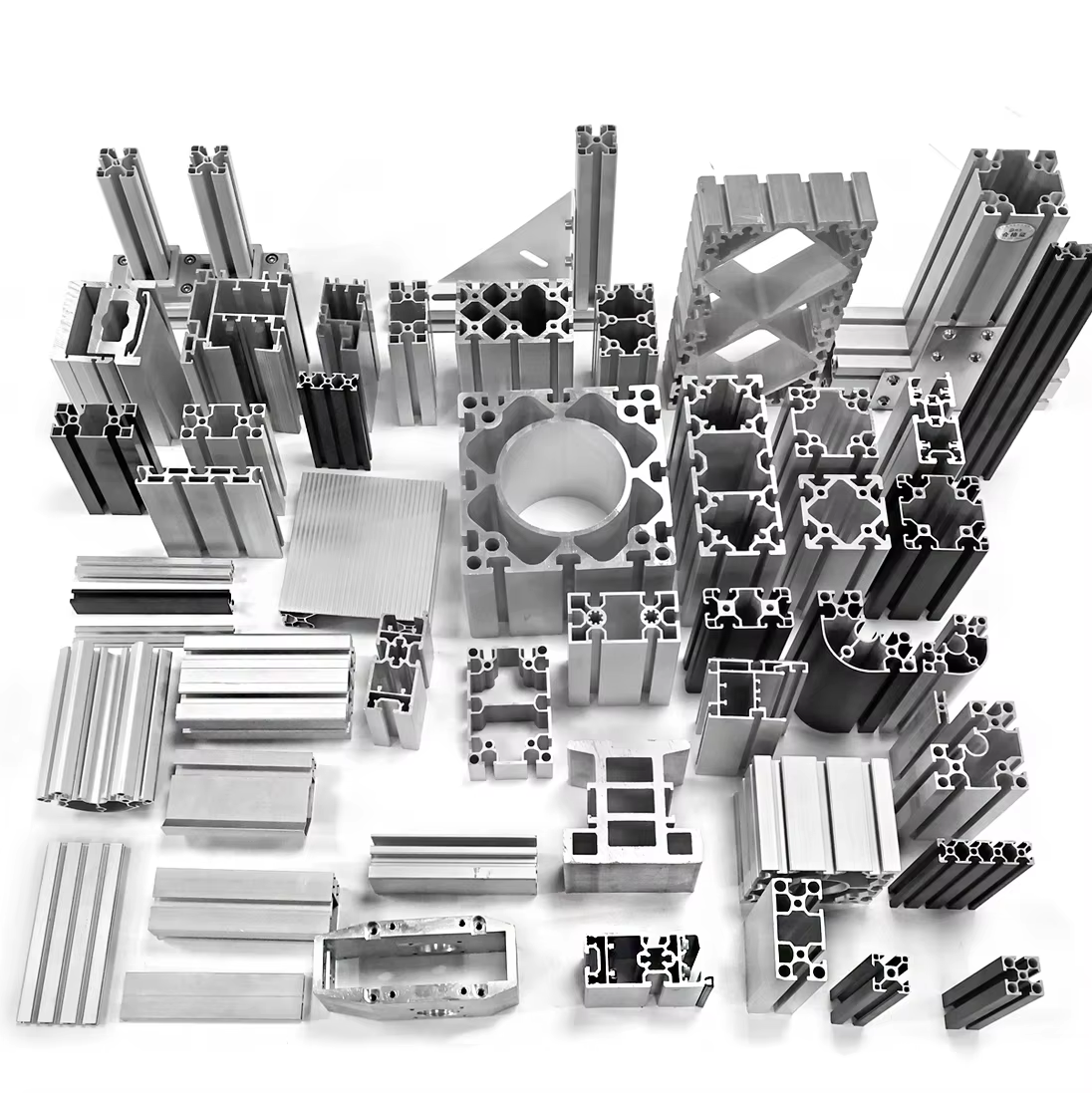
Aluminium extrusion machines can turn solid cylinder billets into complex, precise shapes within just over a minute. The process starts when these billets are heated evenly between around 450 and 500 degrees Celsius. At this temperature range, aluminium becomes pliable enough to work with but still keeps its strength properties intact. Next comes the heavy lifting part literally, as a powerful hydraulic ram pushes the softened metal through specially designed dies. These dies act kind of like molds, shaping the metal into whatever profile is needed whether it's those fancy window frames for buildings or sleek parts for cars. Keeping the metal moving at just the right speed during this whole operation prevents all sorts of manufacturing issues, allowing factories to churn out products at impressive rates sometimes hitting speeds close to 20 meters per minute. Because of this mix of fast production times, repeatable results, and accurate dimensions, most manufacturers stick with extrusion when they need lots of identical parts made precisely every time.
Core Physics Principles: Thermal Plasticity, Hydraulic Force, and Die Confinement
Precision extrusion relies on three key physical principles working together: thermal plasticity, hydraulic force dynamics, and die confinement mechanics. When aluminium gets hot enough, it becomes soft but still holds shape during deformation without breaking apart at the molecular level. The hydraulic system behind this process pushes metal forward with pressures over 10 thousand pounds per square inch, creating smooth flow as material passes through the die opening. Inside the die itself, the carefully designed internal shape converts all that hydraulic power into actual shaping forces. This keeps walls consistently thick (within about 0.1 millimeter) while fighting against the metal's tendency to bounce back after forming. All these factors combined create a uniform microstructure throughout the product. This results in better corrosion protection and stronger materials than casting methods typically offer, sometimes improving strength by around 30 percent. Plus, there's no need for extra heating treatments after the forming process completes.
Key Components of Aluminium Extrusion Machinery and Their Integrated Functions
Extrusion Press System: Ram, Container, and Runout Table Synergy
At the heart of the operation sits the extrusion press system, bringing together hydraulic rams, containment vessels, and runout tables in one working unit. When it comes to action, the ram applies controlled force, sometimes reaching as much as 15,000 tons, pushing those preheated billets right through the container where temperatures stay locked between 450 and 500 degrees Celsius. This heat range is pretty crucial for getting that stable plastic flow we need. Right when the material leaves the die, it gets directed onto the runout table. This part plays a big role in supporting the profile during those first few minutes of cooling, stopping things from drooping or twisting out of shape. All these parts working together let manufacturers keep producing consistently at around 60 meters per minute speed mark, and still maintain those tight dimensions even on tricky shapes like thin walls or oddball designs that just don't want to cooperate.
Extrusion Dies and Tooling: Engineering Precision for Dimensional Accuracy and Surface Integrity
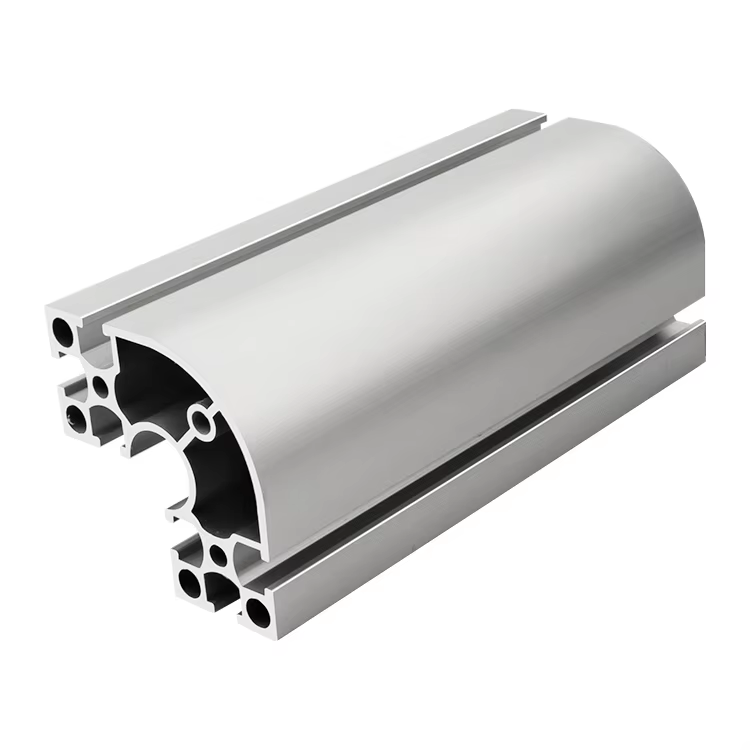
The extrusion dies used in this process are typically made from H13 tool steel and frequently treated with nitriding to stand up better against heat. These dies play a crucial role in determining how accurate the final profile will be. The openings in these dies have been calculated and optimized so they can maintain the desired shape within about 0.1 mm tolerance. Several engineering elements work together to keep things running smoothly during production. For instance, specific bearing lengths help manage how fast materials flow through, relief angles stop stuff from sticking to the die surfaces, and those support structures spread out pressure that can reach over 700 MPa across the entire system. All these careful design decisions help eliminate problems such as visible die lines, unwanted twisting effects, or surface damage. As a result, manufacturers achieve surface finishes under 3.2 micrometers Ra and get that near-perfect dimensional accuracy needed for parts destined for aircraft manufacturing.
The End-to-End Aluminium Profile Shaping Process
Billet Preparation: Homogeneous Heating at 450–500°C for Optimal Extrudability
Getting the billet ready is really important for making sure the extrusion process works right. When working with cylindrical billets, they need to be heated properly in special furnaces until they reach around 450 to 500 degrees Celsius. This heating needs to be even throughout the whole billet so there's no cold spots left inside. The temperature control system keeps things within about plus or minus 5 degrees, which matters a lot because it stops those annoying stress problems and oxidation issues from happening. After this prep work, the material becomes much easier to extrude since it stays pliable and flows smoothly through the dies without any cracks forming or getting stuck somewhere along the way. Billets that have been treated correctly come out with far less leftover stress built up inside them, making them ready for all sorts of detailed shapes when subjected to intense pressures during manufacturing.
Extrusion, Quenching, and Stretching: Stabilizing Geometry and Mechanical Properties
After loading, the hot billet gets pushed through the die at speeds between about 5 and 50 meters per minute. When it comes out, we quickly cool it down using either fast moving air or water. This rapid cooling locks in the special microstructure and keeps around 80% of the maximum hardness right away. Next comes stretching where we pull the material between 0.5 to 3 percent longer. This helps get rid of internal stresses inside the metal, fixes any small curves, and makes sure everything runs straight instead of bending sideways. Stretching also makes sure all parts of the profile have similar strength characteristics without damaging the surface quality. The last step involves aging the material naturally over time or speeding up the process artificially. Either way, this increases the tensile strength by roughly 25 to 40 percent. That kind of reinforcement gives us the structural integrity needed for buildings, vehicles, and various industrial uses where reliability matters most.