EN
EN

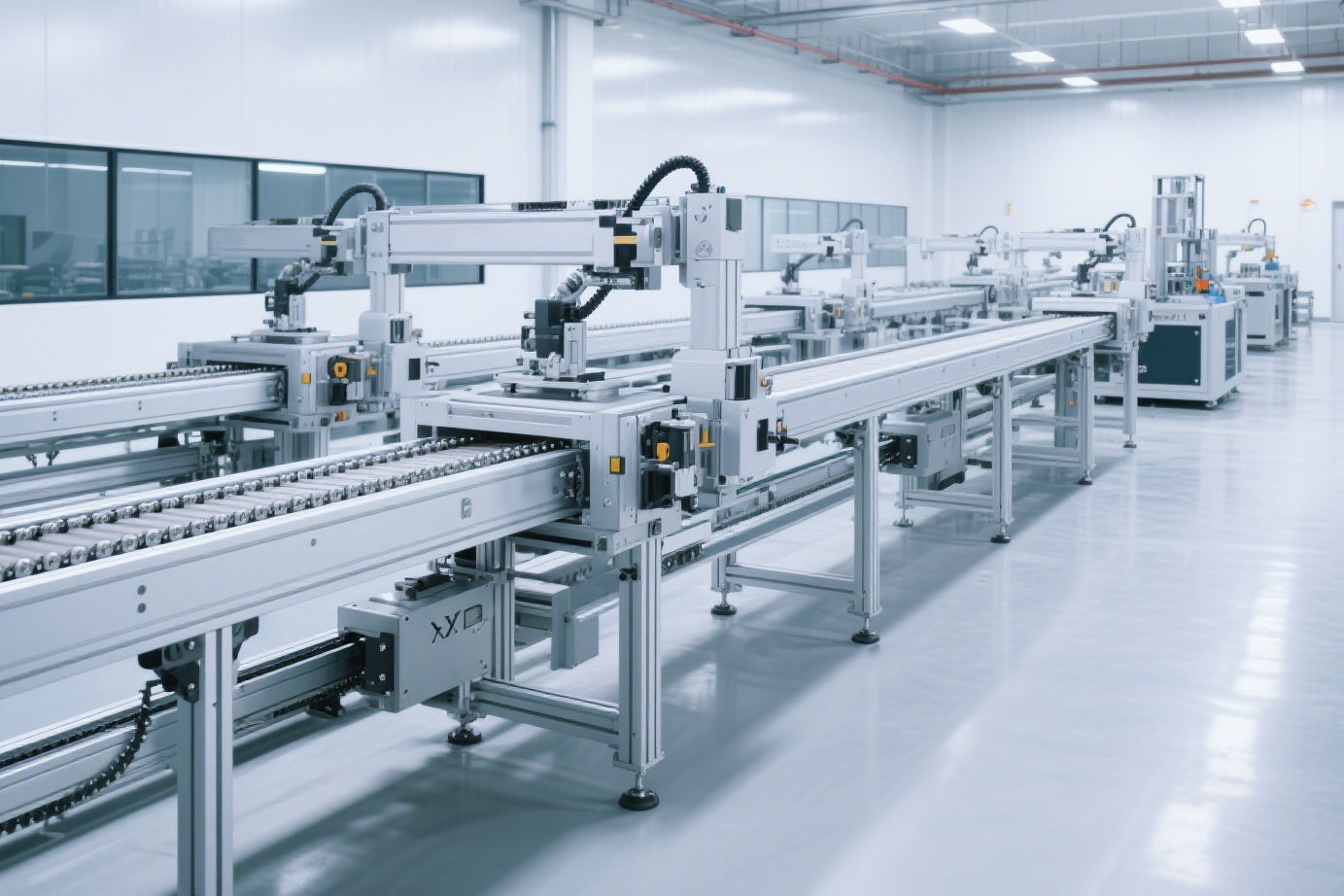
Lithium battery Pack production is not just about moving products from one station to another.
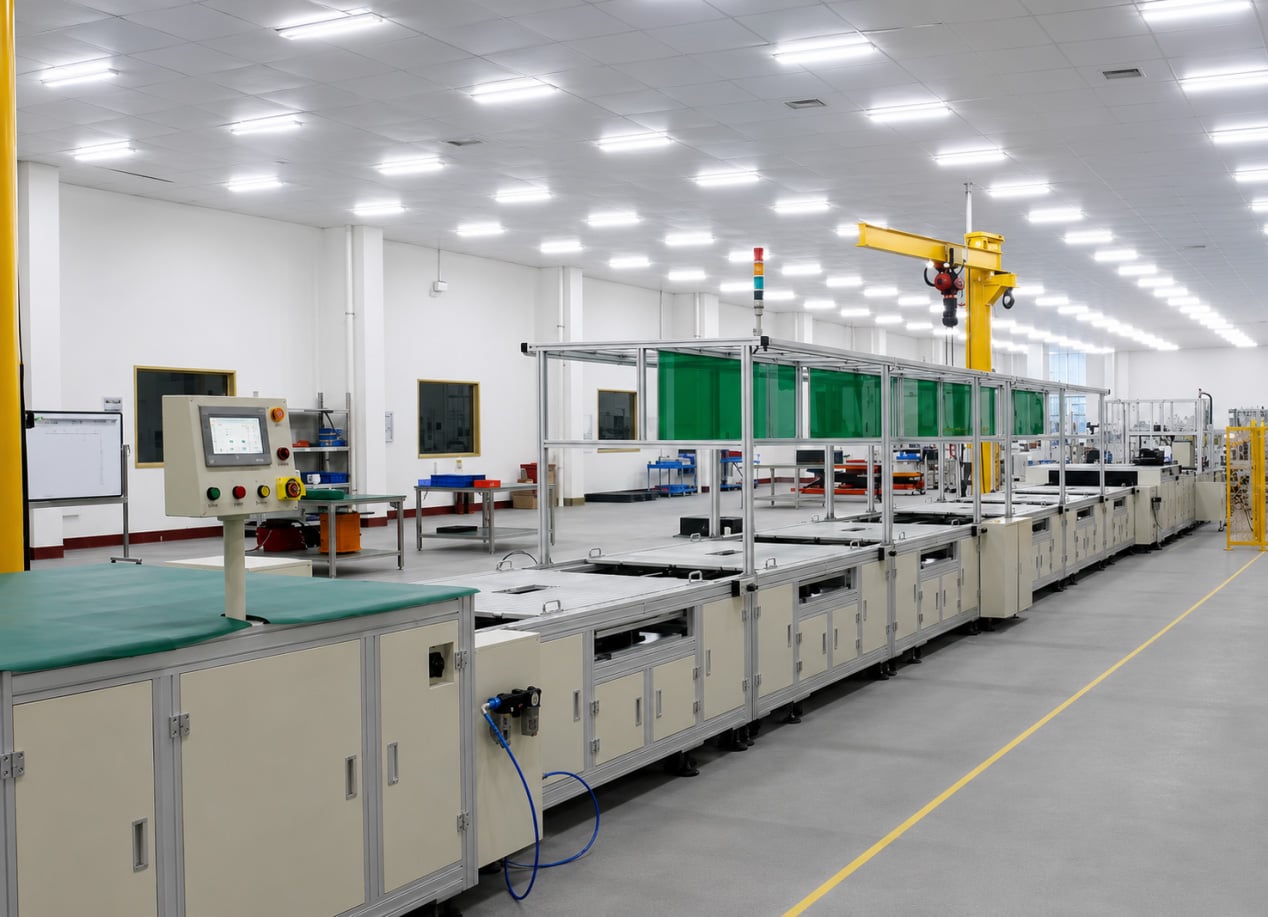
From cell sorting and module assembly to welding, inspection, aging tests, final packaging, and offline handling, a Pack production line involves multiple processes, tight takt time, heavy workpieces, and strict requirements for stability. Compared with a standard light-duty assembly line, the conveying system in a lithium battery Pack line needs to handle much more than basic material transfer.
In many projects, companies pay close attention to welding machines, testing equipment, robotic arms, and automation stations, but overlook the efficiency of material flow between processes. As a result, even when each individual machine performs well, the entire line may still suffer from waiting, blocking, inaccurate positioning, excessive manual handling, or unstable production rhythm.
For a lithium battery Pack production line, the conveyor system is not just auxiliary equipment. It is the foundation that connects all process units together. In particular, a pallet conveyor system needs to carry heavy battery modules, support accurate positioning, and work with lifting, transferring, rotating, testing, and tracking modules. Its performance directly affects the efficiency and stability of the whole production line.
1. The First Challenge in Pack Production Is Heavy Load
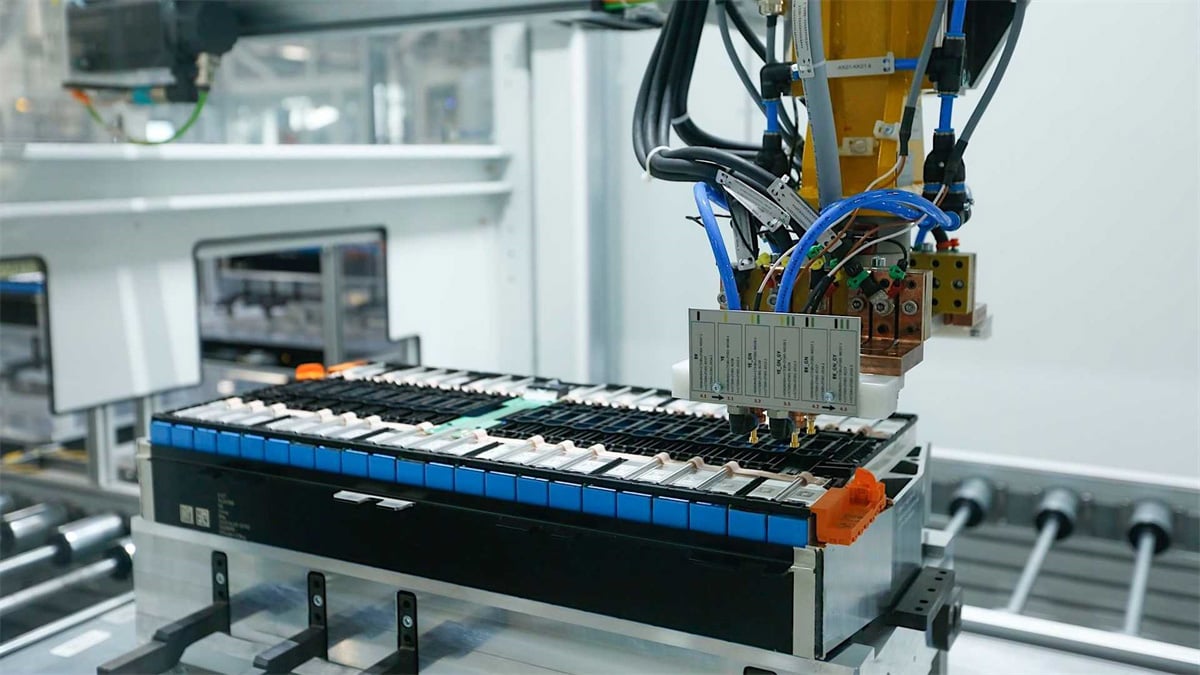
Unlike ordinary light-duty assembly lines, lithium battery Pack lines often handle battery modules, pallet fixtures, testing fixtures, and complete battery packs.
These products are heavy, large in size, and sensitive to impact or position deviation. If manual handling or simple conveyor lines are still used, production efficiency will be limited, while the risks of product damage and safety issues will increase.
Therefore, the first requirement for a Pack line conveyor system is sufficient load capacity.
The advantage of a pallet conveyor system is that the product does not move directly on a belt or roller surface. Instead, it is placed on a standard pallet or fixture, and the pallet carries the product through different processes. This reduces direct contact between the product and the conveyor surface, while making it easier for downstream stations to perform positioning, inspection, testing, and automated operations.
For heavy-duty applications, common solutions include accumulation roller conveyors, heavy-duty speed chain conveyors, lift-and-transfer units, and vertical return systems. During system design, engineers should not only consider the weight of a single product, but also the pallet weight, fixture weight, number of products in buffer zones, starting impact, and safety margin.
If the load capacity is insufficient, problems may not appear during light-load testing. But once the line enters full-load production, issues such as speed drop, roller wear, chain elongation, unstable positioning, or unexpected downtime may occur.
2. Accurate Positioning Is Just as Important as Load Capacity
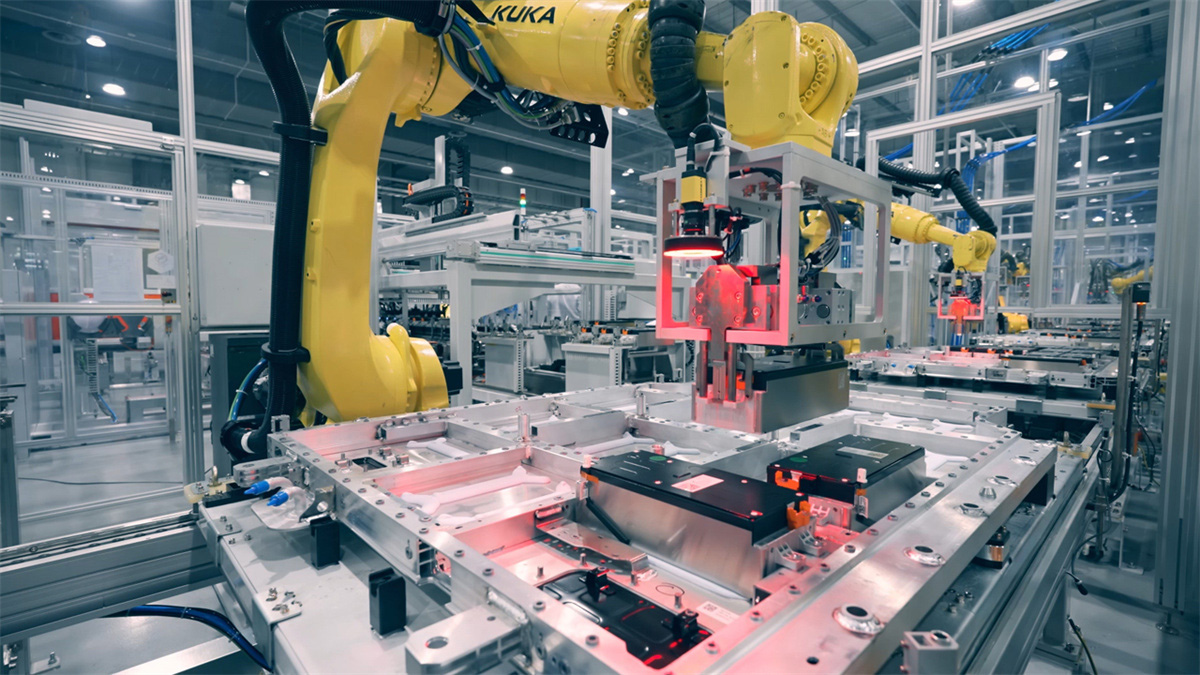
A lithium battery Pack line does not simply require products to arrive at the next station. Many processes require accurate and repeatable positioning.
For example, automatic welding, screw fastening, code scanning, air tightness testing, dimensional inspection, and EOL testing all depend on stable product positioning. If the pallet does not stop accurately, downstream equipment may need additional correction. In serious cases, it can lead to welding deviation, poor test contact, or false inspection results.
That is why a pallet conveyor system usually needs to work together with stop units, lifting positioning units, and guiding mechanisms.
A typical approach is: when the pallet reaches a workstation, a stopper first blocks the pallet. Then a lifting positioning unit raises the pallet from the conveyor surface, separating it from chain or roller movement. Finally, positioning pins, positioning blocks, or guiding structures complete the precise positioning.
The purpose of this design is to separate conveying accuracy from workstation positioning accuracy.
The conveyor system is responsible for stable material flow, while the lifting and positioning unit is responsible for precise station positioning. If the system relies only on the conveyor itself to stop the product, it is difficult to meet the stability requirements of welding, inspection, assembly, or testing stations.
3. The Value of a Pallet System Lies in Modularizing Complex Processes
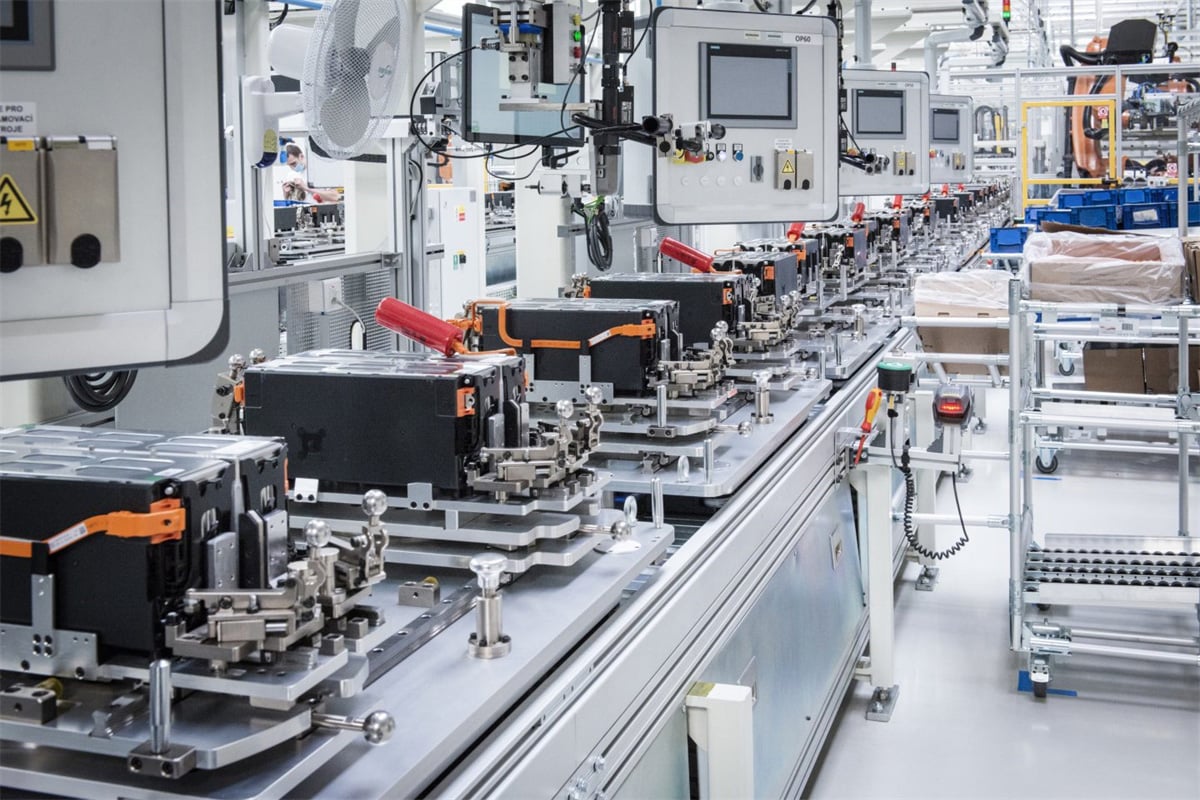
A lithium battery Pack production line is usually a combination of many process stations.
The front section may include cell scanning, sorting, and loading. The middle section may involve module assembly, welding, and inspection. The rear section may include charging and discharging tests, aging, packaging, and offline handling. Each station has different actions, different takt time, and different requirements for layout and space.
If the conveyor system is built as a fully customized one-piece structure, the design cycle will be long, and later modifications will be difficult. Once the battery model changes, the pallet size, workstation quantity, return method, and line layout may all need to be adjusted.
A modular pallet conveyor system solves this problem by combining standard functional units according to actual production needs.
A complete system may include:
straight conveyor sections for main line transfer;
lifting positioning units for workstation stopping;
lift-and-transfer units for branching or direction change;
rotary units for orientation adjustment;
vertical lifts for upper and lower return lines;
buffer sections for balancing takt time differences;
RFID carriers for production data tracking.
By combining these modules, the line can be designed as a horizontal loop, upper-and-lower return line, U-shaped layout, circular layout, or other configurations. This makes it easier to adapt to different factory spaces and production capacity plans.
For the lithium battery industry, this flexibility is especially important. Battery models update quickly, and production lines often need expansion, modification, or upgrading. If the conveyor system lacks flexibility, every future adjustment may become a major reconstruction project.
4. Stable Takt Time Depends on More Than Machine Speed
When evaluating line efficiency, many companies focus only on the processing speed of individual machines.
However, in real production, the output of the whole line is often not determined by the fastest machine, but by the slowest station, the longest waiting time, and the most frequent bottlenecks.
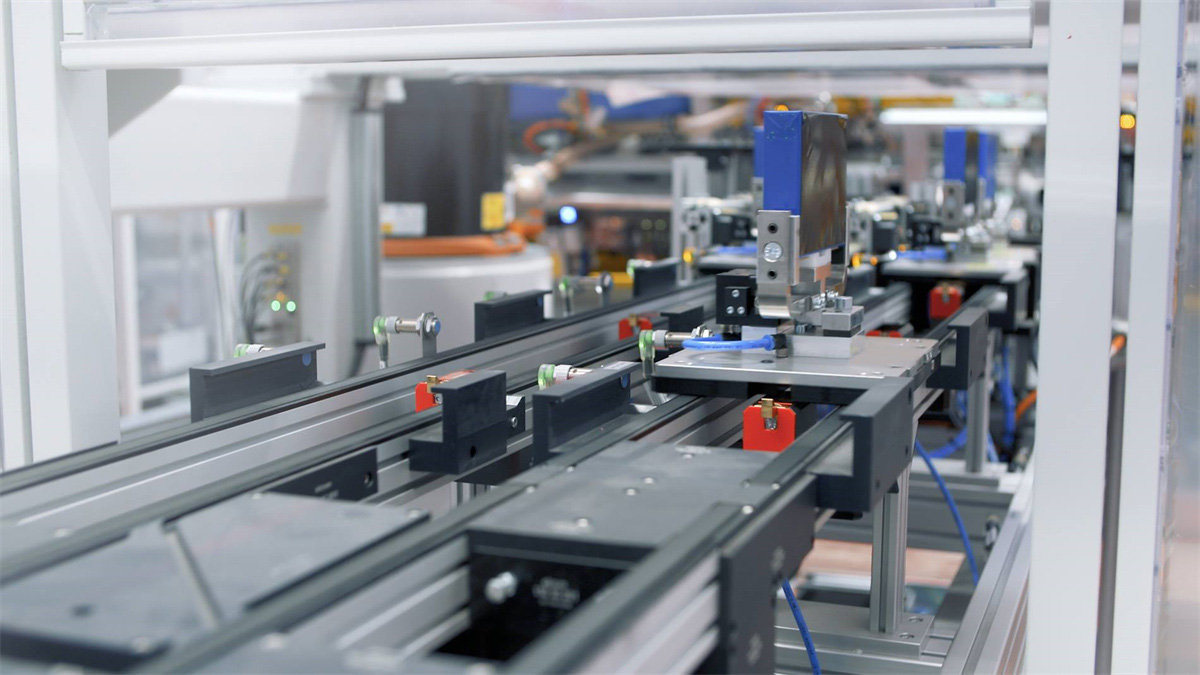
One key value of a pallet conveyor system is that it can balance takt time differences through buffering, accumulation, and sectional control.
For example, if one testing station has a longer cycle time, products from the previous station may accumulate. Without a buffer section, the upstream process may be blocked, and the downstream process may also experience waiting. With accumulation conveying and buffer zones, the system can absorb process fluctuations and prevent one station from affecting the whole line.
Sectional control can also reduce unnecessary movement. Each conveyor section can start and stop according to the pallet status, instead of keeping the whole line running continuously. This helps reduce energy consumption and mechanical wear.
A mature Pack production line is not defined by how fast each individual station runs. It is defined by smooth material flow, fewer waiting points, fewer blockages, and easier abnormal handling.
5. Data Traceability Is Becoming a Standard Requirement
Lithium battery Pack products require high consistency, safety, and traceability.
From the moment a group of cells enters the line, information such as batch number, process parameters, inspection results, welding data, test data, and final product records may need to be tracked. If this information cannot be accurately linked to the physical product, quality tracing becomes difficult.
A pallet conveyor system can work with RFID, barcodes, sensors, and upper-level control systems to bind product information with pallet information.
When a pallet enters a workstation, the system reads the corresponding data, calls the required process parameters, and records the result of that process. In this way, the full production path, process status, and quality data of each battery Pack can be recorded from loading to unloading.
This is also why pallet conveyor systems are no longer just mechanical conveying equipment. They are becoming part of intelligent production lines.
They not only move products, but also carry production data and connect equipment, workstations, and management systems.
6. Fast Delivery Depends on Standardized Solutions
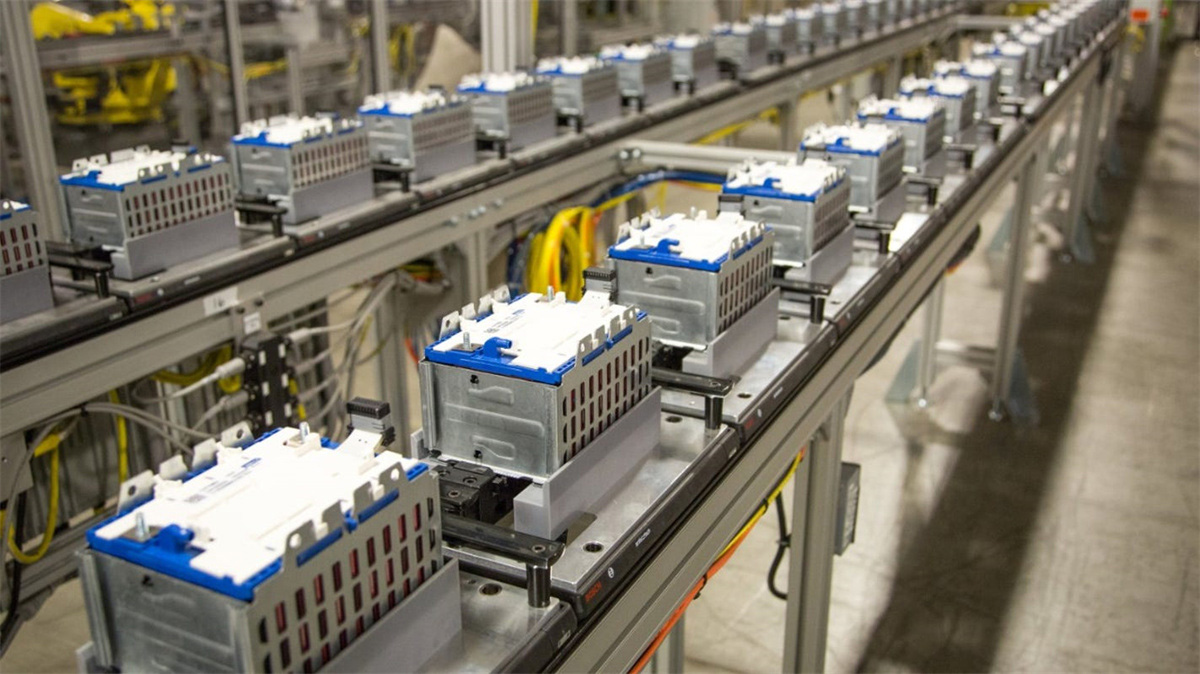
The lithium battery industry often moves fast, and many expansion projects have tight delivery schedules.
If each conveyor system is designed from zero, the process of layout planning, structural design, manufacturing, assembly, and on-site debugging will take much longer. For customers, every delay in line commissioning may affect production capacity and order delivery.
The advantage of a standardized pallet conveyor system is that common modules are already mature. Engineers can quickly configure a solution based on product weight, pallet size, workstation quantity, takt time, and factory layout.
This helps shorten the proposal cycle and reduce non-standard design risks.
However, standardization does not mean simply copying a template. A lithium battery Pack line still requires careful confirmation of actual production conditions, including:
pallet size and load capacity;
number of workstations and takt time;
whether lifting positioning is required;
whether transfer, rotation, or vertical return is required;
whether the buffer length is sufficient;
whether conveyor height matches the equipment interface;
how RFID and sensors should be arranged;
whether maintenance space is reserved;
whether safety protection is complete.
Only when standard modules are properly matched with the actual process can the conveyor system avoid the problem of “looking workable on paper but difficult to use on site.”
Conclusion
The efficiency of a lithium battery Pack production line does not depend only on welding machines, testing equipment, or robotic arms. It also depends on whether products can move between workstations continuously, accurately, and reliably.
This is exactly the value of a pallet conveyor system.
It supports heavy-load transportation, ensures workstation positioning, balances takt time differences, enables data traceability, and leaves room for future expansion or line modification.
For lithium battery manufacturers, the conveyor system is not just supporting equipment. It is the foundation of stable Pack line operation. If load capacity, positioning, buffering, return flow, traceability, and maintenance are considered properly at the design stage, the line can reduce downtime, rework, and repeated modification in later production.
A mature Pack production line is not just about making one station run faster. It is about smooth material flow, stable positioning, clear data tracking, and flexible expansion.