EN

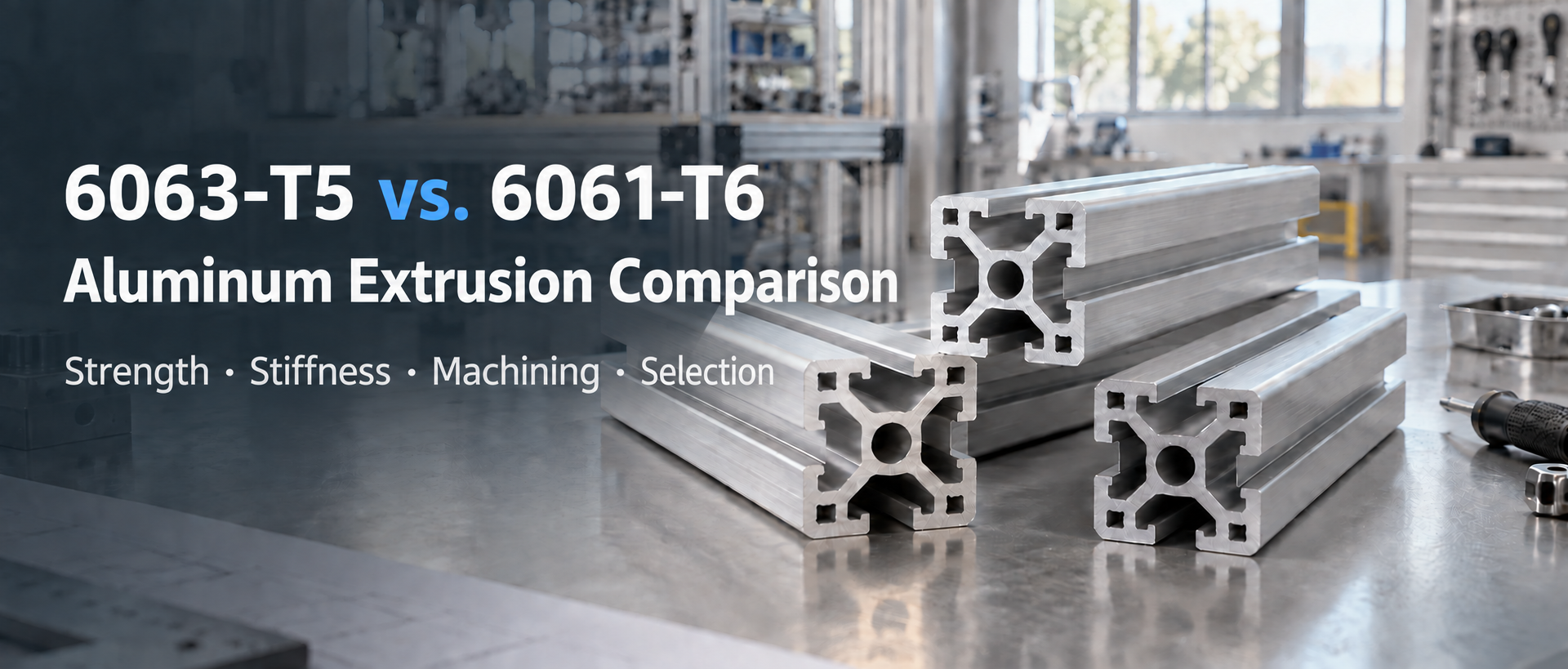
6063-T5 vs. 6061-T6 Aluminum Extrusions: Which One Fits Your Frame?
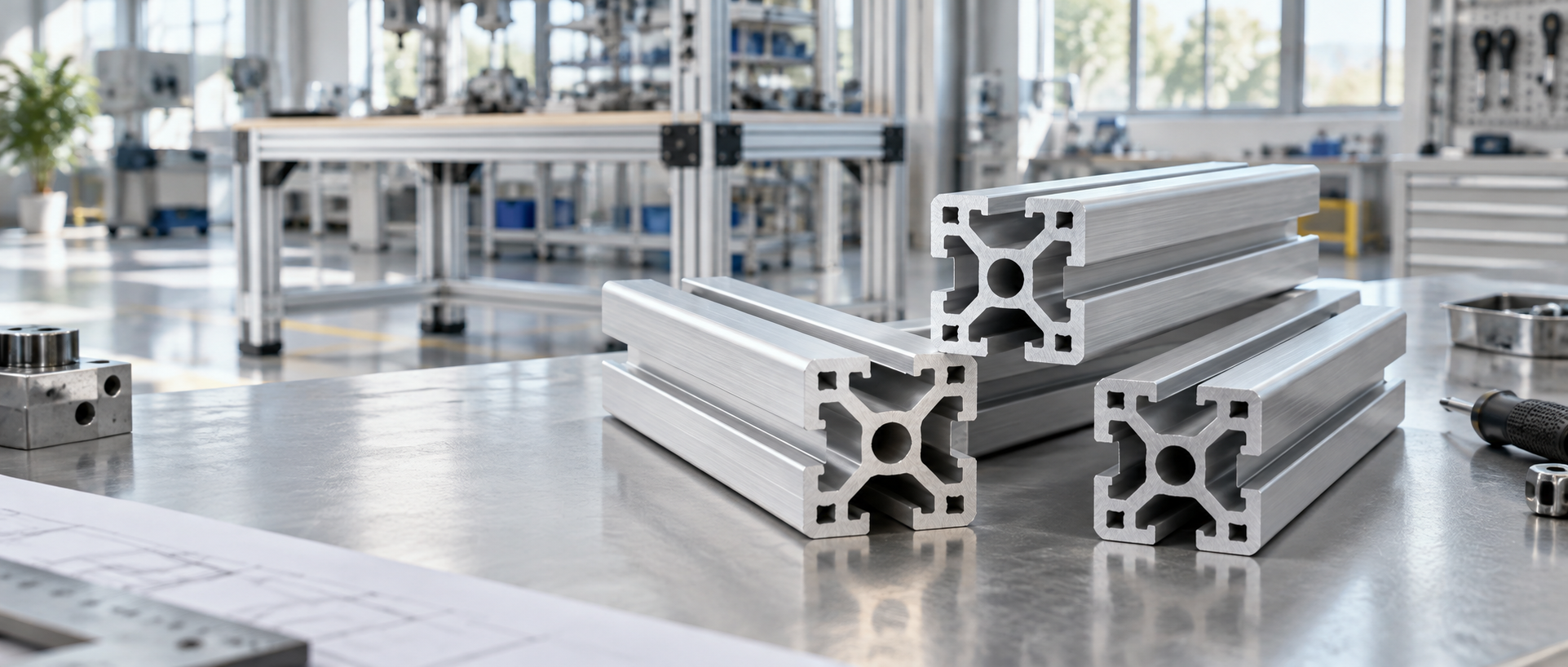
 Two equipment frames can look nearly identical, yet one drawing calls for 6063-T5 and the other specifies 6061-T6. The stronger alloy may sound like the safer choice. But will it make a long crossbeam deflect less? Will it make the finished frame more accurate?
6061-T6 offers higher strength. 6063-T5 is often a good fit for complex extruded profiles and visible frame surfaces. When a long beam sags under load, its cross-section and span usually deserve attention before its alloy designation.
Separating strength, stiffness, and manufacturing requirements makes the choice much easier.
Start with the alloy and temper
6063 and 6061 are both 6xxx-series aluminum alloys, with magnesium and silicon as their main alloying elements. The numbers identify the alloys; T5 and T6 identify their tempers.[1][2]
T5 means the material is cooled from an elevated-temperature shaping process and then artificially aged. T6 means it is solution heat-treated and then artificially aged. Comparing 6063-T5 with 6061-T6 therefore changes both the alloy and the temper. It is misleading to attribute every difference to the alloy number alone or to describe T5 and T6 simply as “air-cooled” and “water-cooled.”[1][2][3]
How much stronger is 6061-T6?
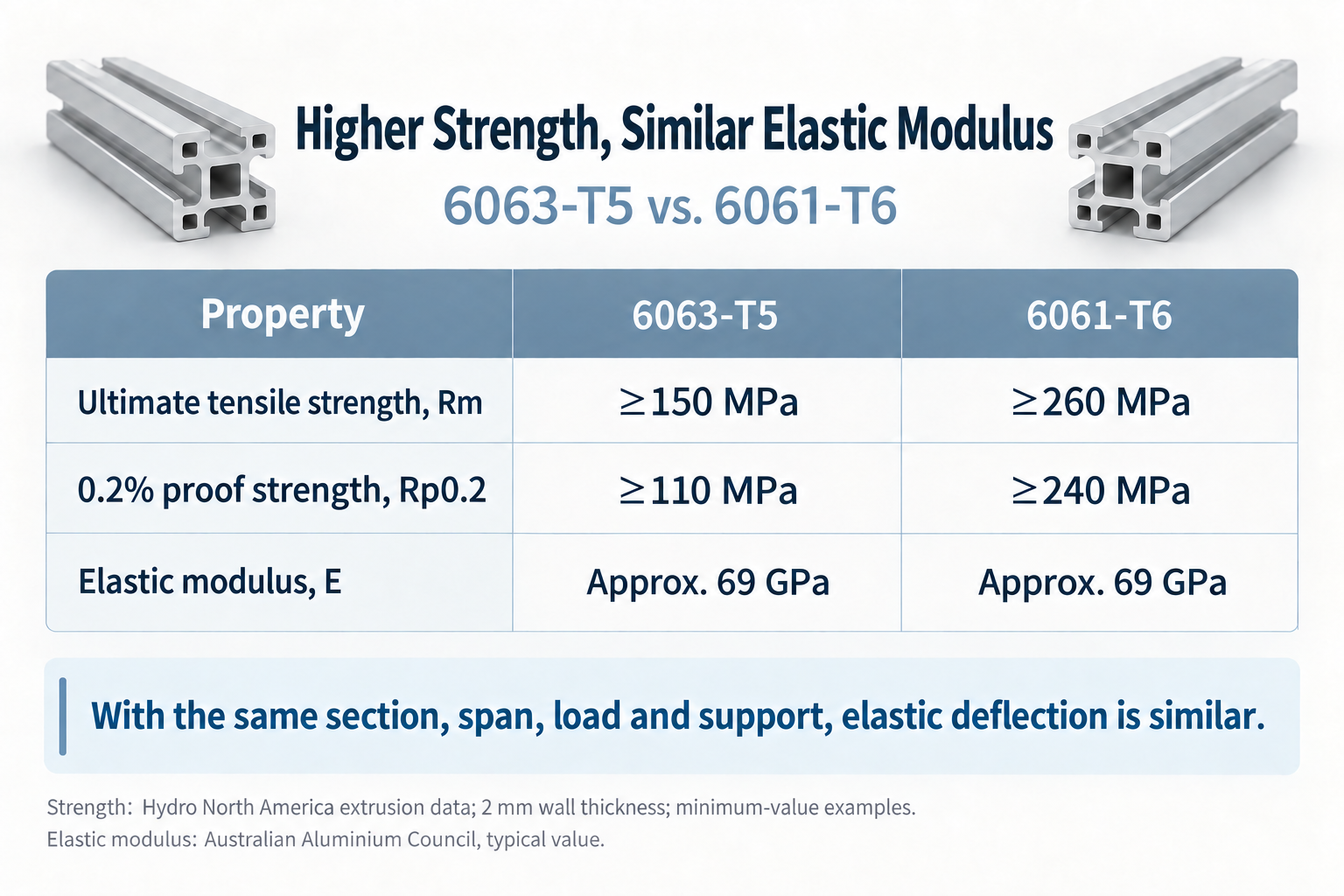
For a like-for-like reference, the table below uses Hydro's North American extrusion data for a 2 mm section thickness. These are the published minimum-value examples for the stated condition.[1][2]
| Property | 6063-T5 | 6061-T6 |
|---|---|---|
| Ultimate tensile strength, Rm | ≥150 MPa | ≥260 MPa |
| 0.2% proof strength, Rp0.2 | ≥110 MPa | ≥240 MPa |
| Elongation after fracture | ≥8% | ≥8% |
These values come from the cited producer's data sheets. They are not batch test results, typical values, or universal acceptance limits under a Chinese national standard. The elongation values use the gauge-length convention stated in the source data: 2 inches or four times the specimen diameter. Specify the applicable standard and product dimensions in the purchase order.
Ultimate tensile strength describes the maximum tensile stress reached during a tensile test. The 0.2% proof strength is more useful when the concern is permanent deformation under load.
On these minimum figures, 6061-T6 has about 1.73 times the tensile strength and 2.18 times the proof strength of 6063-T5. That can matter when space limits the section size and material strength is the binding requirement.
It does not mean a complete 6061-T6 frame carries 1.73 or 2.18 times as much load. Joints, local loads around slots, buckling, and deflection may govern the assembly first.
Higher strength does not necessarily mean less deflection
Strength and stiffness answer different questions. Elastic modulus influences how much a member bends while it remains within the elastic range. The Aluminium Extrusion Manual lists an elastic modulus of about 69 GPa for both 6061 and 6063.[3]
With the same cross-section, span, load, and support conditions, a 6061-T6 beam and a 6063-T5 beam therefore have nearly the same calculated elastic deflection.
Consider a simply supported beam with a 1,000 mm span and a 500 N load at its center. Let its second moment of area be I = 100,000 mm⁴ and its elastic modulus E = 69,000 MPa. Ignoring self-weight, shear deformation, and movement at the joints, the small-deflection beam formula gives:[4]
Center deflection = FL³/(48EI) ≈ 1.51 mm.
| Change | Calculated center deflection |
|---|---|
| Original section in 6063-T5 | About 1.51 mm |
| Same section in 6061-T6 | About 1.51 mm |
| Double I while keeping E unchanged | About 0.75 mm |
Here, I represents the cross-section's resistance to bending. A taller section in the bending direction or a better distribution of its walls and internal cavities can increase I. Reducing the unsupported span also reduces deflection.
If a worktop sags or an inspection fixture moves too much under load, check the section, span, and joint stiffness first. If a member stays bent after the load is removed, check the stress level and whether a higher-strength material is needed. This simplified example shows the relationship; it is not a load rating for any particular profile.
Where 6063-T5 makes sense
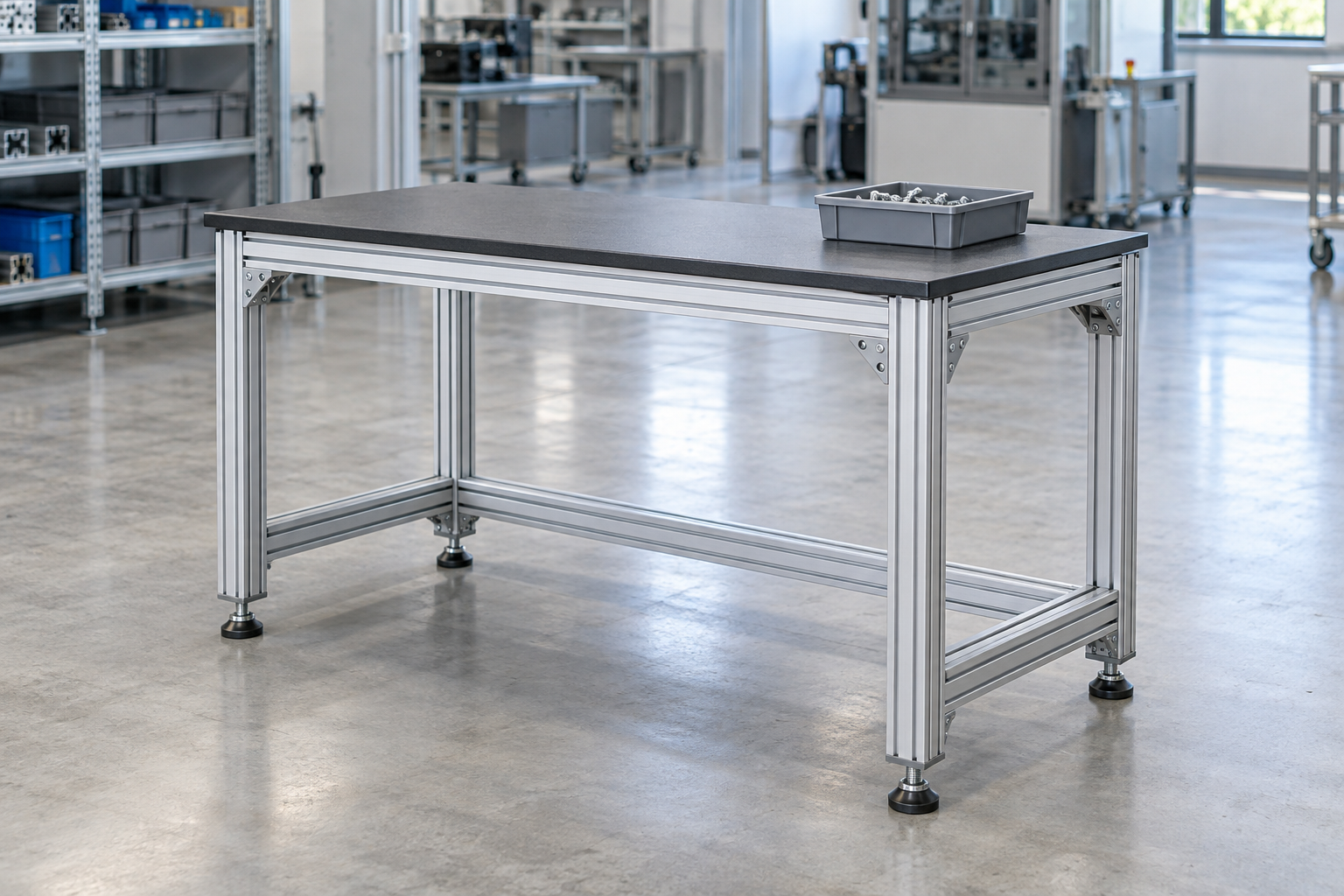
Industrial frame extrusions often combine multiple slots, relatively thin walls, and internal cavities. 6063 extrudes well into such shapes and can provide a good surface finish. Those qualities help explain its use in exposed frames and architectural or decorative profiles.[1][3]
6063 is also often favored when decorative anodized appearance matters. 6061 can be anodized too, including hard anodizing, but achieving a consistent appearance may require closer attention to the material and process. Hydro's 6061 data sheet points readers toward 6063 when decorative appearance is especially important.[1][2]
For an exposed machine guard with complex slots, 6063-T5 is a sensible choice if the design already meets its strength and deflection requirements. A higher strength number by itself is not a reason to change the alloy.
Where 6061-T6 deserves a closer look
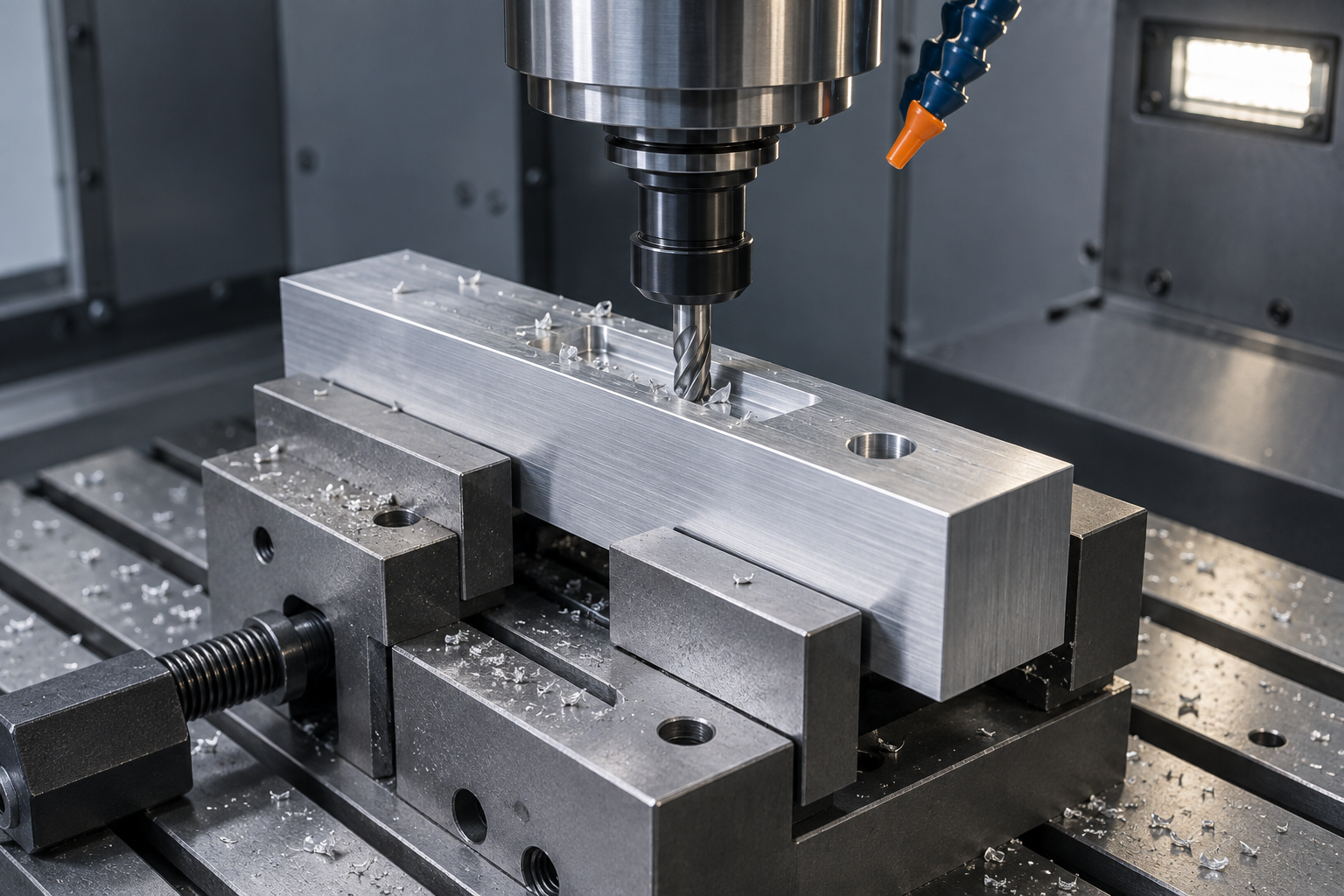
For load-bearing connectors or machine parts that need substantial milling, drilling, or tapping, 6061-T6 offers an attractive combination of strength and machinability. But machinability alone does not guarantee a more accurate finished part. Fixturing, tooling, chip evacuation, and residual stress also affect dimensions and distortion.[2][5]
6063-T5 can also be cut, drilled, and tapped for routine frame fabrication.
Welds require a separate check. Both alloys can be welded with suitable procedures, but fusion welding of heat-treatable aluminum can soften the heat-affected zone. Evaluate a welded structure using the properties of the welded joint rather than assuming that the base-metal T5 or T6 values still apply there.[6]
A practical selection checklist
Workbenches, equipment enclosures, and guards: Check the real loads, section, span, and connections. If both strength and deflection are acceptable, evaluate 6063-T5 first, especially where slot compatibility and visible finish matter.
Space-constrained load-bearing parts: When the allowable section size is limited and calculation shows that material strength is insufficient, evaluate 6061-T6. Check the joints and local stability as well.
Long crossbeams and inspection fixtures: Calculate deflection. Compare a higher second moment of area, a shorter span, or an additional support. Switching to 6061-T6 alone will not deliver the same benefit.
Specify the full alloy and temper on the drawing, such as 6061-T6, and make sure material certificates match the delivered batch. Calipers verify dimensions; appearance tells you about the surface. Neither establishes the alloy or temper. Material identification needs the relevant chemical-composition and mechanical-property evidence.
The useful question is what limits the project: resistance to permanent deformation, control of elastic deflection, or suitability for extrusion, machining, and finishing. Once that is clear, you can decide whether to spend your budget on a different alloy, a better section, or a different frame layout.
Sources
[1] Hydro, Alloy 6063 extrusion data sheet (June 2026)
[2] Hydro, Alloy 6061 extrusion data sheet (2019 version linked by Hydro)
[3] Australian Aluminium Council, Aluminium Extrusion Manual (December 2023)
[4] MIT OpenCourseWare, three-point bending formula