EN
EN

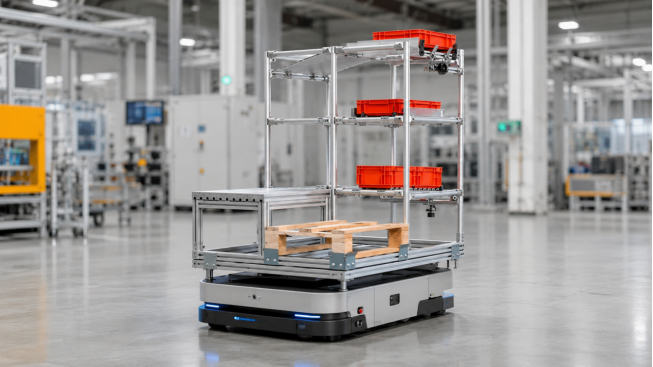
In many factories, material handling is gradually moving away from “people pushing carts, carrying boxes, and searching for materials” toward AGVs, AMRs, unmanned transport vehicles, and mobile industrial robots.
At first glance, the problem may seem simple:
Buy a mobile robot, let it move on its own, and the handling problem is solved, right?
But anyone who has actually worked on improving internal logistics in a workshop knows that it is not that simple.
The mobile robot itself is only a “chassis that can move.”
To truly complete a handling task, it also needs an upper structure to work with it:
What materials will it carry?
How will the materials be fixed?
How will it dock with racks?
How will turnover boxes be placed?
How will pallets be supported?
How will it connect with conveyors, workbenches, and storage racks?
How will the center of gravity remain stable?
How will operators load and unload materials conveniently?
How can it still be adjusted later?
If these questions are not considered in advance, even a mobile robot that runs very smoothly may still struggle to fit into the real workshop environment.
Therefore, planning a mobile handling system is not only about choosing a robot brand or navigation method.
It also requires a top-mounted aluminum profile structure that is suitable for the actual materials on site.
I. A Mobile Robot Is Not an All-Purpose Vehicle; It Needs a Top-Mounted Structure
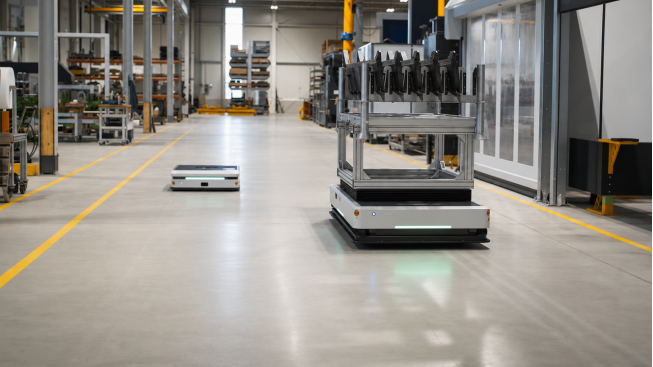
When many customers first come into contact with AGVs or AMRs, they focus mainly on the robot body.
For example:
What navigation method does it use?
What is the maximum load capacity?
How fast can it run?
Can it avoid obstacles?
How long is the battery life?
How does it charge?
Can it connect to a management system?
These questions are certainly important.
But in actual applications, there is another critical question:
What exactly will be installed on top of the robot?
If a box is simply placed on it, the system may work at first, but problems will soon appear:
Materials may not sit stably;
turnover boxes may slide;
pallet positioning may be inaccurate;
manual loading and unloading may be inconvenient;
the height may not match the production line;
it may not connect with racks, workbenches, or conveyors;
and after the product changes, the upper structure may no longer be adjustable.
In other words, the mobile robot body solves the “movement” problem.
What truly determines whether it can serve the production site is the load-bearing structure, positioning structure, loading/unloading structure, and docking structure on top.
This is exactly where industrial aluminum profiles can deliver value.
II. Why Is an Aluminum Profile Structure Suitable for the Top Module?
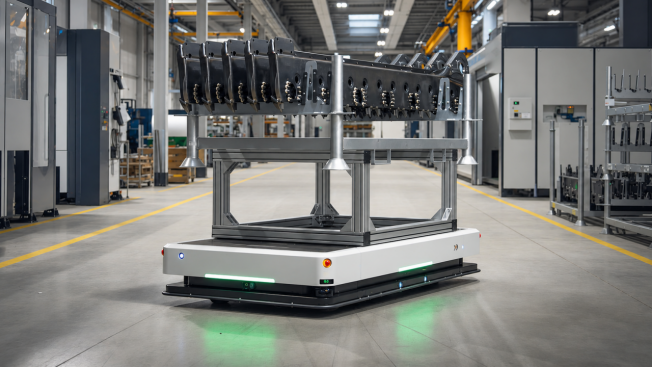
The top-mounted structure of a mobile handling system usually needs to meet several requirements:
First, it must be lightweight.
The heavier the structure is, the less effective payload remains for the materials.
Second, it must be stable.
During movement, the robot will start, stop, turn, and avoid obstacles. If the structure is unstable, the materials can shake or even shift.
Third, it must be modifiable.
Factory conditions change quickly. Today the system may handle Type A bins, while tomorrow it may need to handle Type B pallets. Today it may dock with a workbench, and later it may need to dock with a conveyor line.
Fourth, it must be easy to assemble.
Project implementation cannot rely on welding, grinding, and painting every time. What the site needs is a faster and more flexible way to build structures.
Industrial aluminum profiles are highly suitable for these scenarios.
They come with T-slots and can be quickly assembled with T-nuts, bolts, corner brackets, connecting plates, built-in connectors, leveling feet, casters, panel fasteners, and other accessories.
When the structure needs to be adjusted, components can also be removed, moved, added, or replaced.
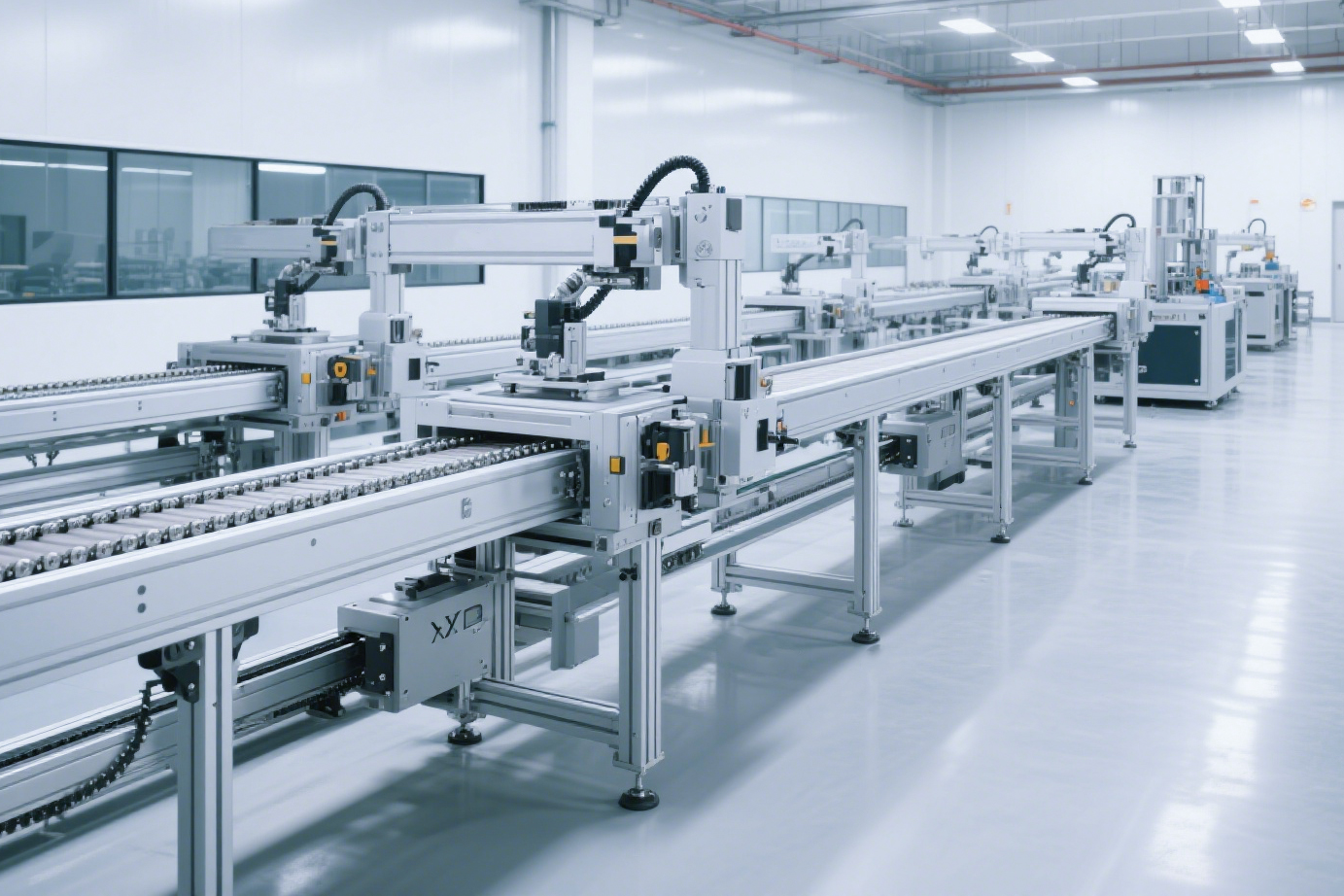
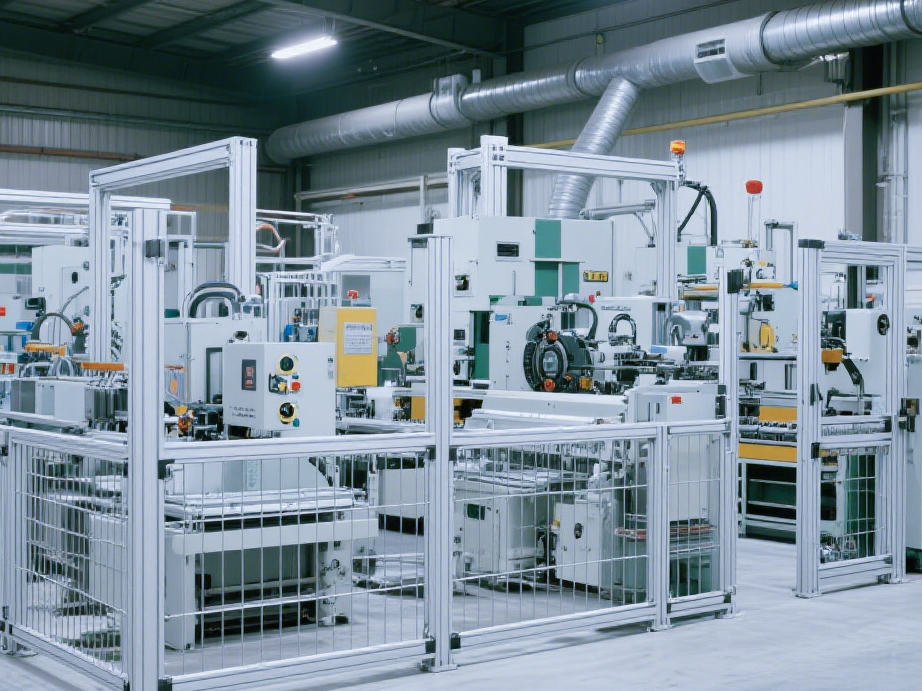
This is why aluminum profiles are widely used in many mobile handling systems, workstations, flow-rack systems, turnover carts, and conveyor supports.
They are not just ordinary materials; they are a structural system that can be combined quickly.
III. The Chassis Is the Chassis, and the Top Structure Is the Top Structure
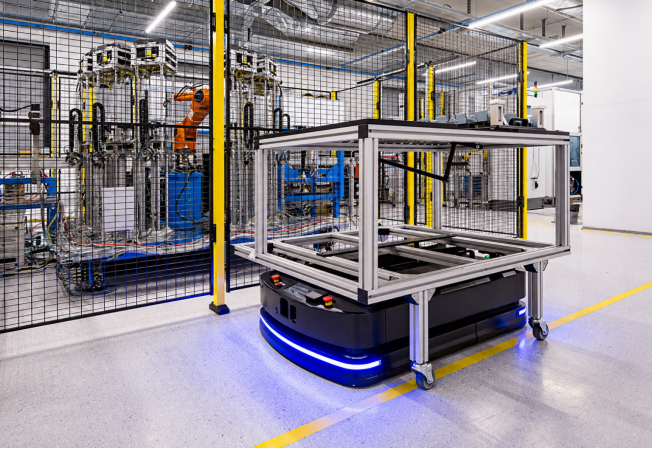
In mobile handling projects, a common misconception often appears:
people look only at the parameters of the mobile robot body while ignoring the top-mounted structure.
In actual planning, however, the chassis and the upper structure should be considered separately.
The chassis is responsible for movement, navigation, obstacle avoidance, scheduling, and basic load support.
The top-mounted structure is responsible for carrying, fixing, positioning, loading/unloading, docking, and protecting the materials.
For example, the same AMR chassis can be equipped with different structures:
It can be made into a pallet carrying platform;
a turnover box rack;
a flow-rack feeding structure;
a multi-level material rack;
a conveyor docking structure;
a tooling cart with guardrails;
or a transfer platform that matches the height of a workstation.
These structural differences determine what kind of scenario the robot can serve.
If the top-mounted structure is not properly planned, the mobile robot can only become a “small cart that can walk.”
But if the top-mounted structure is designed properly, the robot can truly become part of the material flow system.
IV. Questions to Clarify Before Planning a Mobile Handling Structure
Before designing the top-mounted structure, it is not recommended to start drawing immediately.
It is better to first clarify the site requirements.
1. What materials will be transported?
Are they cartons, bins, pallets, tooling plates, semi-finished products, fixtures, or irregularly shaped workpieces?
Different materials require different structures.
Bins are suitable for multi-level racks;
pallets are suitable for load-bearing platforms;
tooling plates are suitable for positioning structures;
small parts are suitable for flow-rack feeding structures;
materials that slide easily require side stops or limiters;
and materials that are easily bumped require protective panels or cushioning structures.
If the material is not clearly defined, the top-mounted structure can easily be designed incorrectly.
2. What is the material weight?
Many people look only at the rated load of the robot, while ignoring that the upper structure itself also has weight.
The robot’s load capacity is not entirely available for the materials.
It needs to deduct:
the weight of the aluminum profile frame;
the weight of connectors;
the weight of panels;
the weight of flow rails;
the weight of guardrails;
the weight of positioning parts;
and the weight of other mounting components.
Therefore, during design, we should not only ask “How heavy are the materials?” We should also calculate the total weight of “materials + top-mounted structure.”
If the structure is too heavy, it will affect not only battery life and operating efficiency, but also stability.
3. Where is the center of gravity?
The biggest concern for a mobile handling structure is an unstable center of gravity.
If the top structure is too high, or if the materials are concentrated on one side, the robot may shake when turning, accelerating, or decelerating.
This is especially important for multi-level racks, vertical frames, and box-carrying structures.
During design, try to achieve the following:
Place heavy items lower;
keep materials centered;
balance the weight on the left and right sides;
avoid making the structure too high;
and add limiting, protective, or fixing structures when necessary.
A simple-looking aluminum profile rack, once installed on a mobile chassis, should no longer be treated like an ordinary fixed rack.
Because it moves.
A moving structure requires more attention to stability than a fixed structure.
4. How will materials be loaded and unloaded?
A mobile handling system is not only responsible for “moving materials to a place.”
It must also consider “how materials are placed” and “how materials are taken away.”
For example:
Will employees take materials from the front or from the side?
Is the pickup height suitable?
Is an inclined angle required?
Is first-in, first-out required?
Does it need to dock with a workbench?
Does it need to feed directly into a conveyor?
Does the robot need to dock automatically?
If employees have to bend down, stretch, or walk around every time they pick up materials, the structure is not truly user-friendly.
A good top-mounted structure should allow materials to naturally move into the next operation after they arrive.
This is why small structural details such as flow rails, rollers, positioning side stops, limit blocks, and guide plates are so important.
They may not be expensive, but they directly affect the on-site user experience.
V. Common Types of Aluminum Profile Top-Mounted Structures
For Hengdong Aluminum, the part we are better suited to support is the structural part of a mobile handling system, rather than the robot body itself.
Common supporting structures include the following categories.
1. Pallet Carrying Platform
Suitable for transporting standard pallets, tooling plates, turnover bases, or larger materials.
This type of structure usually requires:
a heavy-duty aluminum profile frame;
bottom mounting interfaces;
pallet limiting structures;
anti-slip plates or support panels;
positioning stops;
and guardrails if necessary.
If the customer already has a mobile robot chassis, the upper aluminum profile frame can be customized according to the chassis mounting holes and pallet dimensions.
The focus of this structure is not complexity, but stability, flatness, and clear positioning.
2. Multi-Level Rack for Turnover Boxes
Suitable for transporting standard bins, small parts, assembly materials, and semi-finished products.
A multi-level rack structure needs to focus on:
the height of each level;
the load of each level;
the bin size;
the loading and unloading direction;
whether an incline is required;
whether side stops are required;
whether label positions are needed;
and whether anti-drop structures are required.
The advantage of aluminum profiles is that the layer height can be adjusted according to the bin size.
If bins are replaced later, the crossbeam positions can also be adjusted again.
Compared with welded structures, this adjustability is more suitable for factory sites with high-mix, low-volume production.
3. Flow-Rack Feeding Structure
If materials need to follow first-in, first-out principles, or if employees need to pick up materials from a fixed position, a flow-rack structure can be considered.
Bins are loaded from the rear end and slide forward by gravity.
After a bin is removed from the front, the bins behind it automatically move forward to replenish the position.
This structure is highly suitable for:
workstation feeding;
material replenishment beside assembly lines;
semi-finished product buffering;
small-part delivery;
and turnover box management.
If this structure is installed on a mobile chassis, it becomes a mobile feeding cart.
It does not simply move the bins to another place; it also incorporates the “feeding action” into the overall plan.
4. Conveyor Docking Structure
Some mobile robots are not designed for employees to take materials from them. Instead, they need to dock with equipment or conveyor lines.
In this case, the top-mounted structure may need to be made into:
a roller platform;
a belt conveyor section;
a synchronous belt docking structure;
a height-adjustable platform;
a limiting and guiding structure;
or a sensor mounting bracket.
The focus of this type of structure is docking height, docking direction, and positioning accuracy.
If the height is slightly off, material transfer will not be smooth.
If the guiding structure is not well designed, materials may get stuck.
If the structure is unstable, it may shift after long-term operation.
Therefore, for conveyor docking structures, equipment height, material size, transfer direction, and site space must be confirmed in advance.
5. Mobile Workstation Structure
In some scenarios, the mobile robot is not only used for material transport; it may also become part of a mobile workstation.
For example:
mobile tool carts;
mobile inspection tables;
mobile assembly tables;
mobile scanning stations;
mobile kitting stations;
and mobile maintenance platforms.
This type of structure involves more accessories:
tabletop panels;
light stands;
tool hanging panels;
power cable ducts;
monitor brackets;
material box holders;
document holders;
handles;
and protective panels.
The advantage of aluminum profile structures is that these accessories can be combined into one frame and can still be adjusted later.
VI. Do Not Ignore the Interface: The Top Structure Must Connect to the Chassis
There is one key point for the top-mounted structure of a mobile robot:
It is not simply placed on the robot.
It must be reliably connected to the chassis.
This requires confirming the chassis interface in advance.
For example:
Where are the mounting holes?
What is the hole spacing?
What bolts are allowed?
Is the upper surface of the chassis flat?
Are there positioning pins?
Are there electrical interfaces?
Are there areas that must be avoided for sensors?
Is there space reserved for charging or maintenance?
Will it interfere with LiDAR, cameras, or safety sensors?
If these questions are not confirmed in advance, the frame may fail to fit after it is made, or it may affect robot operation after installation.
Therefore, if a customer needs a customized top-mounted structure, it is best to provide:
the robot chassis dimension drawing;
the mounting hole drawing;
load-bearing requirements;
material dimensions;
material weight;
the travel route;
and information about docking equipment.
Based on this information, Hengdong can help break down the aluminum profiles, connectors, machined holes, and accessory list.
VII. Safety Should Not Be Considered Last; It Should Be Considered from the Beginning
A mobile handling structure is different from an ordinary fixed rack.
It moves among people, equipment, and aisles.
Therefore, safety should be considered early in the design stage.
Key questions include:
Will the edges or corners of the structure scratch or hit people?
Will materials slide off during movement?
Will a tall rack shake easily?
Will the frame affect robot sensors?
Is the aisle wide enough?
Is the turning radius sufficient?
Are warning lights, reflective strips, or bumper strips required?
Will it interfere with workbenches, equipment, or storage racks?
For automated guided vehicles or mobile robot systems, relevant safety standards and on-site management requirements also need to be evaluated. The source material also notes that safety factors must be considered from the beginning when planning mobile industrial robot systems, and it refers to the requirements of GB/T 30029-2023, General Rules for Design of Automated Guided Vehicles.
Hengdong Aluminum can provide structural components and frame support, but the final safety evaluation of the mobile system must still be jointly confirmed by the customer, robot supplier, system integrator, and site management team.
This point must be made clear.
Because the aluminum profile structure is only part of the system; it is not the complete mobile robot system.
VIII. IT and Scheduling Systems Also Affect Structural Design
Many people think that IT systems have nothing to do with aluminum profile frames.
In reality, they often affect each other during on-site integration.
The source material also mentions that mobile industrial robot systems do not operate in isolation. They are part of networked internal logistics, so wireless networks, warehouse management systems, and interfaces should be considered in advance.
For the top-mounted structure, IT and scheduling systems indirectly affect many details.
For example:
Does the robot need to scan barcodes?
Does it need to install an RFID reader?
Does it need sensor brackets?
Does it need a display screen?
Does it need signal lights?
Does it need space for an electrical control box?
Does it need wire ducts and routing space?
Does it need reserved maintenance access?
If these interfaces are only considered later, the structure may need to be re-drilled, re-machined, and re-wired.
Therefore, when planning an aluminum profile top-mounted structure, it is necessary to consider not only mechanical load bearing, but also the installation positions of sensors, electrical components, and identification devices.
This is also an advantage of aluminum profile structures.
T-slots allow many brackets and accessories to be added later without welding every time.
IX. Why Should the Structure Not Be Fixed Permanently from the Start?
Mobile handling systems often need to adapt to on-site changes.
Material sizes may change;
product models may change;
bin specifications may change;
workstation locations may change;
transport routes may change;
and even the robot brand may change.
If the top-mounted structure is completely welded and fixed from the beginning, later modifications will be costly.
Aluminum profile structures are more suitable for scenarios that require iteration.
The first version can meet basic transport needs.
Later, side stops, guardrails, guides, flow rails, barcode scanner brackets, sensor brackets, and docking platforms can be added.
If the materials change, some crossbeams can be replaced or the layer height can be adjusted.
This is very important for production sites.
Many automation projects are not perfect from the beginning; they are continuously optimized during use.
Aluminum profile structures leave room for adjustment.
X. What Supporting Items Can Hengdong Aluminum Provide?
For mobile handling systems, material transfer structures, and aluminum profile top-mounted frames, Hengdong Aluminum can provide the following supporting items:
industrial aluminum profiles;
European standard profiles and Chinese national standard profiles;
common sizes such as 2020, 3030, 4040, and 4080;
profile accessories;
T-nuts, bolts, corner brackets, and connecting plates;
end caps, hinges, handles, leveling feet, and casters;
panel fasteners, built-in connectors, and reinforced brackets;
flow rails, rollers, and some automation structure accessories;
cut-to-length service;
drilling;
tapping;
counterboring;
slotting;
CNC machining;
simple pre-assembly;
accessory sorting;
order breakdown according to drawings;
BOM list support;
and grouped packaging and shipment.
Aluminum profiles can be supplied in lengths of up to 6000 mm.
The standard cutting tolerance is +/-0.5 mm.
Cutting service can be provided free of charge. Drilling, tapping, counterboring, slotting, CNC machining, and other processes are quoted separately according to drawings and quantities.
For customers with drawings, Hengdong can help check profile specifications, lengths, hole positions, tapping requirements, accessory matching, and BOM lists.
For customers still in the planning stage, they can first provide material dimensions, weights, application scenarios, and reference structures, and then further confirm the profile and machining solution.
XI. Recommended Planning Sequence for a Mobile Handling Top-Mounted Structure
If a customer wants to build a top-mounted structure for an AMR, AGV, or mobile material cart, the requirements can be organized in the following sequence.
Step 1: Confirm the Mobile Chassis
Confirm the chassis dimensions, load capacity, mounting holes, sensor positions, allowable installation area, and maintenance space.
Step 2: Confirm the Materials to Be Transported
Confirm the material type, dimensions, weight, center of gravity, placement direction, and whether protection is required.
Step 3: Confirm the Loading and Unloading Method
Will the materials be loaded and unloaded manually, or will the structure dock with a conveyor line?
Is material pickup one-way or two-way?
Is first-in, first-out required?
Is inclined feeding required?
Step 4: Confirm the Structural Form
According to the material and usage method, choose a pallet platform, multi-level rack, flow-rack frame, roller platform, conveyor docking structure, or mobile workstation structure.
Step 5: Confirm Profiles and Accessories
According to load, span, height, and connection method, choose 3030, 4040, 4080, or larger aluminum profiles, and match them with nuts, bolts, corner brackets, connectors, limiters, and panel fasteners.
Step 6: Confirm Machining Requirements
Confirm whether cutting, drilling, tapping, counterboring, slotting, CNC machining, and simple pre-assembly are required.
Step 7: Confirm Safety and Site Conditions
Confirm aisle width, turning space, personnel contact risks, material anti-drop measures, sensor clearance, warning signs, and operating rules.
Step 8: Confirm Future Expansion
Reserve space for sensor brackets, barcode scanning equipment, display screens, electrical control boxes, wire ducts, light strips, or other accessory installations.
A structure planned in this way is much more likely to be implemented successfully on site.
XII. The Hidden Mechanisms of a Mobile Handling System Are Actually in the Details
Many people believe that the difficult part of a mobile handling system lies in the robot body.
But once the system is used on the workshop floor, the details that truly affect performance are often these:
Can the bins be placed stably?
Can the pallets be positioned correctly?
Is it easy for employees to pick up materials?
Does the frame affect sensors?
Is the center of gravity stable?
Do the hole positions align?
Can the height dock properly?
Can the structure be adjusted later?
Are the accessories easy to replace?
Is the structure easy to maintain?
These details are not flashy, but they determine whether the system is truly easy to use.
A mobile robot can move materials automatically.
A well-designed aluminum profile top-mounted structure allows materials to be properly carried, fixed, transferred, and handed over.
When these two work together, they form a mobile handling solution that can truly serve the site.
Conclusion: Automation Is Not an Isolated Device, but a Structural System That Can Be Implemented on Site
Mobile industrial robots, AGVs, and AMRs will be used more and more widely.
But for many factories, the first problem to solve is not only “which robot to buy.”
Instead, it is:
How should the materials be carried?
How should the structure dock?
How should it connect with workstations?
How should employees load and unload materials?
How can it be adjusted later?
How can safety be ensured?
These questions often require a clear, reliable, and adjustable aluminum profile structure.
Hengdong Aluminum will continue to provide modular structural support for customers through industrial aluminum profiles, profile accessories, custom machining, and structural supporting services, including mobile handling top-mounted structures, material transfer frames, workbenches, racks, turnover carts, and conveyor frames.
The mobile robot is responsible for movement.
The aluminum profile structure is responsible for making materials move in a stable, reasonable, and efficient way.
Table of Contents
- I. A Mobile Robot Is Not an All-Purpose Vehicle; It Needs a Top-Mounted Structure
- II. Why Is an Aluminum Profile Structure Suitable for the Top Module?
- III. The Chassis Is the Chassis, and the Top Structure Is the Top Structure
- IV. Questions to Clarify Before Planning a Mobile Handling Structure
- V. Common Types of Aluminum Profile Top-Mounted Structures
- 1. Pallet Carrying Platform
- 2. Multi-Level Rack for Turnover Boxes
- 3. Flow-Rack Feeding Structure
- 4. Conveyor Docking Structure
- 5. Mobile Workstation Structure
- VI. Do Not Ignore the Interface: The Top Structure Must Connect to the Chassis
- VII. Safety Should Not Be Considered Last; It Should Be Considered from the Beginning
- VIII. IT and Scheduling Systems Also Affect Structural Design
- IX. Why Should the Structure Not Be Fixed Permanently from the Start?
- X. What Supporting Items Can Hengdong Aluminum Provide?
-
XI. Recommended Planning Sequence for a Mobile Handling Top-Mounted Structure
- Step 1: Confirm the Mobile Chassis
- Step 2: Confirm the Materials to Be Transported
- Step 3: Confirm the Loading and Unloading Method
- Step 4: Confirm the Structural Form
- Step 5: Confirm Profiles and Accessories
- Step 6: Confirm Machining Requirements
- Step 7: Confirm Safety and Site Conditions
- Step 8: Confirm Future Expansion
- XII. The Hidden Mechanisms of a Mobile Handling System Are Actually in the Details
- Conclusion: Automation Is Not an Isolated Device, but a Structural System That Can Be Implemented on Site